


 +91-85304 14111




OUR BLOGS
Our Latest Blogs
24 Nov 2025
By Mansi Jha l Infrastructure
Traditional vs ERP Project Management: Why Infrastructure Projects Keep Failing
Last month, a mid-sized construction company in Texas lost $2.3 million on a highway project because their procurement team ordered materials based on a three-week-old spreadsheet. The site manager had updated quantities, but the email got buried. By the time anyone noticed, they had 40% more asphalt than needed and not enough rebar. This wasn't bad luck. It's what happens when you try traditional project management on a $50 million infrastructure project with tools designed for grocery lists. The Real Problem with Traditional Infrastructure Project Management Most infrastructure companies know their traditional project management approach is broken. What they don't realize is how much it's actually costing them. When you're juggling road construction, bridge repairs, or utility installations, you're not just moving dirt and pouring concrete. You're coordinating subcontractors across multiple sites, managing compliance documentation that could fill a warehouse, and trying to keep costs from ballooning while material prices change weekly. And you're doing all of this with: Scheduling software that can't talk to your budgeting tool Purchase orders tracked in email threads Site updates that take two days to reach headquarters Budget reports compiled manually every Friday (if you're lucky) Where Traditional Methods Actually Break Down The visibility gap is worse than you think. Your site manager knows there's a three-day weather delay. Your procurement officer doesn't, so materials arrive on schedule and sit in the rain. Your finance team forecasts completion based on the original timeline. Everyone's working with different information, and nobody realizes it until there's a crisis. Manual tracking creates compound errors. One team member enters labor hours wrong. Those hours feed into cost projections. Those projections inform budget decisions. By the time anyone catches the mistake, you've approved expenditures based on faulty data. I've seen companies realize they were 15% over budget only after they were too far in to course-correct. Disconnected systems waste more time than the actual work. Project managers spend hours each week hunting for information that should be at their fingertips. What's the current burn rate? How many labor hours are left in the budget? When will the next concrete delivery arrive? Each question requires checking a different system, calling someone, or waiting for a report. What Actually Works: ERP Project Management for Infrastructure Here's what changed for that Texas construction company: they implemented biCanvas ERP six months after the asphalt disaster. Not because it's magic, but because ERP project management solved their actual problems. Single source of truth. When the site manager updates material quantities in biCanvas, procurement sees it immediately. When finance approves a budget change, project managers know before lunch. Everyone works from the same data because there's only one place where data lives. Real-time everything. This sounds like marketing speak until you experience it. Your field team photographs a foundation issue at 9 AM. Engineering reviews it by 10 AM. You've ordered corrective materials by noon. No email chains, no phone tag, no three-day delays that compound into three-week disasters. Mobile access that actually matters. Your crew can clock in, request materials, and flag issues from their phones on-site. Not "mobile-friendly" web pages that barely work. Actual apps built for people wearing gloves in the dirt. Automated compliance tracking. Government infrastructure projects require mountains of documentation. With integrated systems, documents attach automatically to the relevant project phases, approvals route to the right people, and audit trails build themselves. You're not scrambling to find paperwork when inspectors show up. The Money Part Let's be direct about costs because that's what actually matters. A typical infrastructure project loses 8-12% of its budget to inefficiencies. On a $10 million project, that's $800,000 to $1.2 million. Most of that comes from: Overordering materials because you don't trust your data (20-30%) Labor inefficiencies from poor coordination (25-35%) Delayed decisions because information arrives too late (20-25%) Compliance issues and rework (15-20%) An ERP system costs money upfront, yes. But companies typically see ROI within 12-18 months through reduced overruns, better resource allocation, and fewer costly mistakes. The Texas company I mentioned? They completed their next three projects 11% under budget. Not because they cut corners, but because they stopped hemorrhaging money through disconnected systems. Real-Time Project Tracking ERP: What This Actually Looks Like Imagine running a multi-site road construction ERP project with biCanvas: Morning: Your dashboard shows all sites, current tasks, budget burn rate, and any issues flagged overnight. Takes 5 minutes instead of an hour of phone calls. Midday: A site needs an emergency concrete delivery. Your team submits a request from their phone. The system checks inventory, gets approval based on budget rules, and sends the PO to your supplier. Done in 10 minutes instead of tomorrow. Afternoon: You need to shift equipment from Site A to Site B because of weather. You update the schedule, reassign resources, and notify both teams. The system adjusts labor forecasts and budget projections automatically. End of day: Your CFO asks about project financials. You pull a real-time report showing exactly where every project stands. No waiting until Friday's manual compilation. The Hard Truth About Switching to ERP Project Management Switching from spreadsheets and disconnected tools to construction ERP software like biCanvas isn't comfortable. Your team will resist. Someone will say "we've always done it this way." Training takes time. The first month will feel chaotic. But here's the thing: the chaos you're avoiding by not changing is already there. You're just so used to it that it feels normal. The three-hour weekly status meeting that could be a five-minute dashboard check? That's chaos. The budget surprises every month? Chaos. The constant firefighting and last-minute scrambles? All chaos. The question isn't whether to disrupt your current process. It's whether you want to disrupt it intentionally and improve, or let it keep disrupting your projects and profits. Where to Start with ERP for Infrastructure Projects If you're running infrastructure projects and this sounds familiar, you have options: Start small. Pick one troubled project and run it through construction ERP software while maintaining your old methods on others. Compare the results. When one project comes in on time and under budget while the others don't, you'll have your answer. Focus on your biggest pain point. If material tracking is killing you, implement that module first. If it's budget control for infrastructure projects, start with integrated financial management. You don't have to overhaul everything at once. Get your field teams involved early. They're the ones who'll use this daily. If they see how it makes their jobs easier, they'll push adoption. If you force it from the top down without their input, you'll get resistance. Traditional vs ERP Project Management: The Bottom Line Traditional project management isn't failing because project managers are incompetent. It's failing because the tools were built for a different era. Infrastructure projects have outgrown spreadsheets and disconnected systems. biCanvas and similar ERP for engineering and construction platforms exist because the industry demanded better. Not perfect, not magical, just actually built for how infrastructure project management works in 2025. Your projects are too complex, your margins too thin, and your competition too fierce to keep managing things the old way. The companies winning bids and delivering profitably aren't smarter than you. They just have better systems and smarter project planning tools.
Leave A Comment
OUR BLOGS
Our Latest Blogs
24 Nov 2025
By Mansi Jha Infrastructure
Traditional vs ERP Project Management: Why Infrastructure Projects Keep Failing
Last month, a mid-sized construction company in Texas lost $2.3 million on a highway project because their procurement team ordered materials based on a three-week-old spreadsheet. The site manager had updated quantities, but the email got buried. By the time anyone noticed, they had 40% more asphalt than needed and not enough rebar. This wasn't bad luck. It's what happens when you try traditional project management on a $50 million infrastructure project with tools designed for grocery lists. The Real Problem with Traditional Infrastructure Project Management Most infrastructure companies know their traditional project management approach is broken. What they don't realize is how much it's actually costing them. When you're juggling road construction, bridge repairs, or utility installations, you're not just moving dirt and pouring concrete. You're coordinating subcontractors across multiple sites, managing compliance documentation that could fill a warehouse, and trying to keep costs from ballooning while material prices change weekly. And you're doing all of this with: Scheduling software that can't talk to your budgeting tool Purchase orders tracked in email threads Site updates that take two days to reach headquarters Budget reports compiled manually every Friday (if you're lucky) Where Traditional Methods Actually Break Down The visibility gap is worse than you think. Your site manager knows there's a three-day weather delay. Your procurement officer doesn't, so materials arrive on schedule and sit in the rain. Your finance team forecasts completion based on the original timeline. Everyone's working with different information, and nobody realizes it until there's a crisis. Manual tracking creates compound errors. One team member enters labor hours wrong. Those hours feed into cost projections. Those projections inform budget decisions. By the time anyone catches the mistake, you've approved expenditures based on faulty data. I've seen companies realize they were 15% over budget only after they were too far in to course-correct. Disconnected systems waste more time than the actual work. Project managers spend hours each week hunting for information that should be at their fingertips. What's the current burn rate? How many labor hours are left in the budget? When will the next concrete delivery arrive? Each question requires checking a different system, calling someone, or waiting for a report. What Actually Works: ERP Project Management for Infrastructure Here's what changed for that Texas construction company: they implemented biCanvas ERP six months after the asphalt disaster. Not because it's magic, but because ERP project management solved their actual problems. Single source of truth. When the site manager updates material quantities in biCanvas, procurement sees it immediately. When finance approves a budget change, project managers know before lunch. Everyone works from the same data because there's only one place where data lives. Real-time everything. This sounds like marketing speak until you experience it. Your field team photographs a foundation issue at 9 AM. Engineering reviews it by 10 AM. You've ordered corrective materials by noon. No email chains, no phone tag, no three-day delays that compound into three-week disasters. Mobile access that actually matters. Your crew can clock in, request materials, and flag issues from their phones on-site. Not "mobile-friendly" web pages that barely work. Actual apps built for people wearing gloves in the dirt. Automated compliance tracking. Government infrastructure projects require mountains of documentation. With integrated systems, documents attach automatically to the relevant project phases, approvals route to the right people, and audit trails build themselves. You're not scrambling to find paperwork when inspectors show up. The Money Part Let's be direct about costs because that's what actually matters. A typical infrastructure project loses 8-12% of its budget to inefficiencies. On a $10 million project, that's $800,000 to $1.2 million. Most of that comes from: Overordering materials because you don't trust your data (20-30%) Labor inefficiencies from poor coordination (25-35%) Delayed decisions because information arrives too late (20-25%) Compliance issues and rework (15-20%) An ERP system costs money upfront, yes. But companies typically see ROI within 12-18 months through reduced overruns, better resource allocation, and fewer costly mistakes. The Texas company I mentioned? They completed their next three projects 11% under budget. Not because they cut corners, but because they stopped hemorrhaging money through disconnected systems. Real-Time Project Tracking ERP: What This Actually Looks Like Imagine running a multi-site road construction ERP project with biCanvas: Morning: Your dashboard shows all sites, current tasks, budget burn rate, and any issues flagged overnight. Takes 5 minutes instead of an hour of phone calls. Midday: A site needs an emergency concrete delivery. Your team submits a request from their phone. The system checks inventory, gets approval based on budget rules, and sends the PO to your supplier. Done in 10 minutes instead of tomorrow. Afternoon: You need to shift equipment from Site A to Site B because of weather. You update the schedule, reassign resources, and notify both teams. The system adjusts labor forecasts and budget projections automatically. End of day: Your CFO asks about project financials. You pull a real-time report showing exactly where every project stands. No waiting until Friday's manual compilation. The Hard Truth About Switching to ERP Project Management Switching from spreadsheets and disconnected tools to construction ERP software like biCanvas isn't comfortable. Your team will resist. Someone will say "we've always done it this way." Training takes time. The first month will feel chaotic. But here's the thing: the chaos you're avoiding by not changing is already there. You're just so used to it that it feels normal. The three-hour weekly status meeting that could be a five-minute dashboard check? That's chaos. The budget surprises every month? Chaos. The constant firefighting and last-minute scrambles? All chaos. The question isn't whether to disrupt your current process. It's whether you want to disrupt it intentionally and improve, or let it keep disrupting your projects and profits. Where to Start with ERP for Infrastructure Projects If you're running infrastructure projects and this sounds familiar, you have options: Start small. Pick one troubled project and run it through construction ERP software while maintaining your old methods on others. Compare the results. When one project comes in on time and under budget while the others don't, you'll have your answer. Focus on your biggest pain point. If material tracking is killing you, implement that module first. If it's budget control for infrastructure projects, start with integrated financial management. You don't have to overhaul everything at once. Get your field teams involved early. They're the ones who'll use this daily. If they see how it makes their jobs easier, they'll push adoption. If you force it from the top down without their input, you'll get resistance. Traditional vs ERP Project Management: The Bottom Line Traditional project management isn't failing because project managers are incompetent. It's failing because the tools were built for a different era. Infrastructure projects have outgrown spreadsheets and disconnected systems. biCanvas and similar ERP for engineering and construction platforms exist because the industry demanded better. Not perfect, not magical, just actually built for how infrastructure project management works in 2025. Your projects are too complex, your margins too thin, and your competition too fierce to keep managing things the old way. The companies winning bids and delivering profitably aren't smarter than you. They just have better systems and smarter project planning tools.
Leave A Comment
OUR BLOGS
Our Latest Blogs
11 May 2016
By Mansi Jha Construction
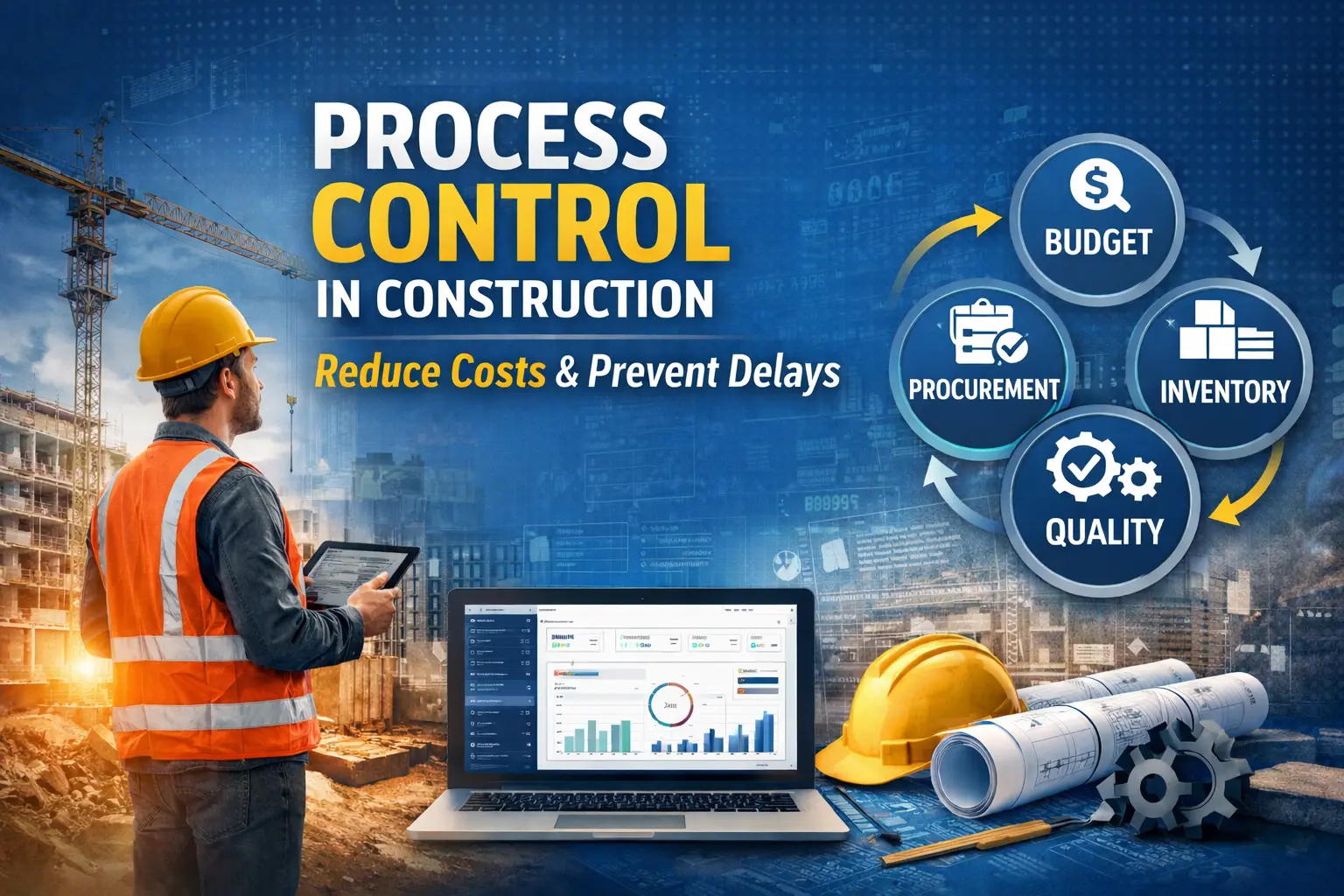
Process Control in Construction: How to Stop Cost Overruns and Project Delays
Construction projects fail for predictable reasons, not unpredictable ones. Budgets spiral because expenses aren't tracked in real time. Projects fall behind because procurement bottlenecks go unnoticed. Site teams and head office work from different information. By the time problems surface, corrective action costs twice as much. Process control in construction is how experienced contractors prevent this. It's the structured management of every workflow: budgets, procurement, materials, quality, and timelines, across the full project lifecycle. This guide covers what process control actually looks like on the ground, where most construction businesses break down, and how an integrated construction ERP software like biCanvas gives you centralized control across every project. What Is Process Control in Construction? Process control is the system that connects every department in your construction business: finance, procurement, warehouse, site execution, billing, and quality, so data flows automatically instead of getting stuck in spreadsheets, calls, and email threads. When process control is weak or absent, contractors typically experience: Budget overruns that only show up at month-end Procurement delays caused by missing or unclear approval chains Stock shortages that halt site work, or overstocking that blocks working capital Miscommunication between site teams and the head office Inconsistent reporting that makes it impossible to compare performance across projects These aren't just operational headaches. They directly cut into project margins and damage your reputation with clients. 1. Financial and Cost Control: Know Where Every Rupee Goes The most expensive mistake in construction is discovering a budget overrun after it has already happened. Effective financial process control means tracking committed costs, actual expenses, and budget utilization in real time, not at the end of the month. When management can see where money is going as it moves, deviations get caught early and corrective action is still possible. What this looks like in practice: Every purchase order is linked to a project budget line Spending alerts trigger when utilization crosses a threshold Finance and site teams see the same numbers simultaneously Want to know how much a proper ERP system can save you in rupees? Check out our Construction ERP ROI Calculator to see the actual numbers for businesses like yours. Without this, you're managing by memory and monthly reports. That's a recipe for surprises. 2. Procurement and Vendor Workflow Control: Stop the Bottlenecks Procurement is where construction projects quietly fall apart. Without standardized approval chains, purchase requisitions sit in someone's inbox for days. Vendor selection becomes inconsistent. Duplicate orders get placed. Materials arrive late or don't match specifications. A key reason this happens is that BOQ, purchase requisitions, and material requests all operate in silos. We've written in detail about why construction operations break between BOQ and MRN, and how connecting these workflows changes outcomes entirely. Structured procurement process control solves this by automating the workflow from requisition to purchase order to delivery. Every step has a defined owner and a time-stamp. Vendor performance, including delivery reliability, quality, and pricing, gets tracked over time, giving you real leverage in negotiations. For a deeper look at this, see our guide on vendor management systems in construction. The result: faster procurement cycles, fewer surprises, and better vendor relationships. 3. Inventory and Warehouse Control: Stop Wastage Before It Starts Inventory problems cost contractors in two ways: excess stock that ties up cash, and shortages that delay execution. Process control in warehouse management means every material movement is recorded receipts, issues, returns, and transfers. Materials are only issued against approved requests. Reorder levels are monitored automatically so stock-outs don't catch you off guard. This structured approach also reduces pilferage and wastage two areas where construction companies lose money without ever seeing a clear line item for it. 4. Project Execution and Quality Monitoring: Catch Issues Before They Escalate Process control doesn't stop at finance and procurement. It extends to the site itself. Tracking project milestones, monitoring site progress, and managing quality issues through structured workflows ensures problems get flagged and resolved before they become expensive. Defect logging with defined resolution timelines means nothing gets ignored or forgotten. When execution data is centralized, management can see project health across all active sites, not just the ones that are loudly in trouble. This is what a true integrated control architecture for construction operations looks like in practice. How biCanvas Gives Contractors Complete Process Control biCanvas is built specifically for construction and infrastructure companies. It integrates finance, procurement, warehouse, site execution, billing, and quality management into a single ERP platform, giving you one source of truth for every project. This integration means data updates flow automatically across the system: A purchase order is raised → committed costs update instantly Materials are received → inventory levels adjust in real time An expense is approved → budget dashboards reflect it immediately There's no manual reconciliation. No waiting for someone to update a spreadsheet. If you're evaluating whether biCanvas is the right fit, our Construction ERP Pricing Guide for India 2026 covers full cost breakdowns including hidden charges, so you know exactly what you're signing up for. Real-Time Visibility Across All Projects With biCanvas, management can monitor every active project from a single dashboard without chasing manual reports. Key metrics available at a glance include: Live budget utilization by project Open purchase orders and pending approvals Current stock availability at each site Outstanding vendor payments Defect resolution status Overall project progress vs. timeline This kind of visibility changes how contractors make decisions, shifting from reactive to proactive. Automated Workflows and Accountability Manual approval processes slow everything down. biCanvas automates them by assigning roles, defining approval hierarchies, and sending notifications directly to responsible stakeholders. Every action is recorded and time-stamped, creating a clear audit trail. Whether it's an expense approval, a material request, or a defect resolution, the system tracks progress from start to finish and assigns clear ownership. Why Process Control Is Non-Negotiable for Growing Construction Companies When you're running one or two projects, manual coordination is manageable. When you're running five, ten, or twenty simultaneously, it breaks down fast. More projects mean more transactions, more vendors, more teams, and more coordination complexity. Without digital systems, growth creates operational chaos instead of operational leverage. ERP-driven process control standardizes workflows across every project and location. It lets leadership focus on winning new business and strategic decisions while the system maintains operational discipline at the ground level. This is what separates contractors who scale successfully from those who plateau, or worse, take on more work than they can control and damage their reputation in the process. Not sure if ERP is worth it for your business size? Read our breakdown of Top 10 ERP Myths vs. Reality for Construction Businesses it answers the most common objections we hear from contractors. Final Thoughts Process control in construction isn't about adding bureaucracy. It's about giving your business the structure to operate at scale without losing visibility or control. When finance, procurement, inventory, execution, and quality management work together in one integrated system, contractors gain something that's genuinely hard to build otherwise: real-time clarity across every project, at every stage. In an industry with tight margins and unforgiving deadlines, that clarity isn't a luxury. It's a competitive advantage. Take Control of Your Construction Projects If cost overruns, procurement delays, or reporting gaps are slowing your business down, biCanvas was built to solve exactly these problems. Book a personalized demo to see how biCanvas works in a construction environment like yours. Walk away with a clear picture of where your current processes can be tightened. Book Your Free Demo ← Link this to your demo booking page
OUR BLOGS
Our Latest Blogs
20 Jan 2026
By Mansi Jha Manufacturing
Cloud-Based ERP Solutions for Manufacturing: Driving Efficiency, Control, and Scalable Growth
Manufacturing businesses today operate under constant pressure to improve efficiency, control costs, and scale operations without increasing complexity. Yet many organizations still rely on disconnected systems, spreadsheets, and manual coordination between production, procurement, inventory, and finance. These gaps often lead to delayed decisions, excess inventory, production bottlenecks, and margin leakage. This is where cloud-based ERP solutions for manufacturing play a transformative role. By unifying core manufacturing processes into a single, real-time platform, cloud ERP enables manufacturers to gain execution-level visibility, enforce process discipline, and respond faster to operational deviations. Modern platforms like biCanvas are designed specifically for complex manufacturing environments—supporting production planning, WIP tracking, inventory control, equipment lifecycle management, procurement workflows, and integrated financial oversight. More importantly, they move ERP beyond reporting into active execution control, helping manufacturers protect margins and scale sustainably. Key Features of Cloud-Based ERP Systems Cloud-based ERP systems are built to centralize manufacturing operations while remaining flexible and scalable. Unlike legacy on-premise systems, cloud ERP platforms provide continuous access to real-time data across plants, warehouses, and departments. Core features typically include production planning, BOM management, inventory visibility, procurement automation, equipment management, and financial integration. biCanvas extends these capabilities by embedding approvals, validations, and workflow controls directly into operational transactions—ensuring that deviations are addressed at the source, not after financial impact has already occurred. Role-based dashboards, audit trails, and real-time alerts allow management teams to monitor performance without depending on delayed reports or manual follow-ups. Benefits of Implementing Cloud-Based ERP in Manufacturing One of the most significant benefits of cloud-based ERP in manufacturing is end-to-end visibility. Production status, material consumption, inventory levels, and cost impact are visible in real time, enabling proactive decision-making instead of reactive corrections. Cloud ERP also improves cross-functional coordination. Production, procurement, maintenance, and finance teams operate on a single source of truth, reducing reconciliation effort and eliminating conflicting data. This alignment directly improves planning accuracy and execution reliability. Scalability is another critical advantage. As manufacturers expand into new plants, product lines, or regions, cloud ERP systems scale without heavy infrastructure investment—making growth faster and more predictable. How Cloud-Based ERP Enhances Operational Efficiency Operational inefficiencies often stem from delayed approvals, poor material planning, and lack of execution-level tracking. Cloud-based ERP systems enhance efficiency by standardizing workflows and automating decision checkpoints. Production schedules become more reliable when material availability, machine capacity, and labor constraints are visible in advance. Procurement is triggered based on actual demand rather than assumptions, reducing overstocking and emergency purchases. Real-time WIP tracking ensures deviations in output or consumption are identified early. With platforms like biCanvas, transactions that violate budgets, approvals, or process rules can be flagged—or blocked—before they escalate into financial losses. This shift from passive reporting to active operational control is where efficiency gains truly compound. Challenges of Transitioning to Cloud-Based ERP Despite its advantages, transitioning to a cloud-based ERP system requires careful planning. Resistance to change is common, particularly in manufacturing environments accustomed to legacy processes or informal workarounds. Data migration and system integration also require structured execution. Historical data must be validated, and integrations with machines, quality systems, or third-party tools must be planned carefully. However, these challenges are temporary. With phased implementation, role-based training, and strong change management, manufacturers can achieve faster adoption and long-term operational stability. Selecting the Right Cloud-Based ERP Solution for Your Manufacturing Business Not all ERP platforms are designed for manufacturing execution. Selecting the right solution requires evaluating depth of operational control, not just feature checklists. Manufacturers should assess whether the ERP supports real production workflows, inventory accuracy, procurement governance, equipment tracking, and financial visibility in a single system. biCanvas is built for environments where execution discipline and cost control are critical—not just reporting. Equally important is scalability and vendor expertise. A manufacturing ERP should grow with the business while continuing to support complex operational requirements. Case Studies: Successful Implementations of Cloud-Based ERP Manufacturing organizations adopting cloud-based ERP systems consistently report measurable improvements: 20–30% reduction in inventory carrying costs due to improved demand visibility 15–25% improvement in production schedule adherence through real-time WIP tracking 30–40% reduction in manual reporting effort, enabling faster decision-making Manufacturers using execution-driven ERP platforms like biCanvas often identify cost overruns within days rather than weeks—allowing corrective action before margins are impacted. The key factor behind success is not just automation, but early detection and control of deviations. Future Trends in Cloud-Based ERP for Manufacturing The future of manufacturing ERP is increasingly intelligent and predictive. Artificial intelligence and machine learning are being embedded into ERP platforms to support demand forecasting, preventive maintenance, and anomaly detection. Sustainability tracking is also becoming a standard ERP capability, enabling manufacturers to monitor energy usage, material waste, and environmental impact. Cloud-based ERP systems are evolving into strategic platforms that support long-term operational resilience and compliance. Integrating Cloud-Based ERP with Other Technologies Cloud ERP systems increasingly integrate with IoT, mobile platforms, and analytics tools. IoT integration enables real-time monitoring of equipment performance, while mobile ERP access allows supervisors to capture data directly from the shop floor. Platforms like biCanvas are designed to unify these inputs into a single operational view—connecting production, inventory, finance, and equipment data for faster, more accurate decision-making. Conclusion: The Future of Manufacturing with Cloud-Based ERP Solutions Cloud-based ERP solutions are no longer optional for manufacturing businesses aiming to remain competitive. They provide the foundation for operational visibility, execution control, and scalable growth. By choosing a manufacturing-focused ERP like biCanvas, organizations move beyond delayed reporting toward real-time control—identifying issues early, protecting margins, and building disciplined, data-driven operations. As manufacturing complexity continues to increase, cloud ERP will be the backbone of efficient, resilient, and profitable manufacturing enterprises.
OUR BLOGS
Our Latest Blogs
08 Dec 2025
By Mansi Jha Ready Mix Concrete
Best Ready Mix Concrete ERP (RMC ERP) in 2026 — Complete Guide
The Ready-Mix Concrete industry has always operated under pressure — tight timelines, strict mix-design requirements, real-time dispatch coordination, unpredictable delays, rising material costs, and the responsibility of delivering consistent quality to every site. In 2026, the complexity has only increased. Customers expect faster deliveries, tighter quality control, and complete traceability, while RMC companies need better control over batching, logistics, and cost to stay profitable. This is where Ready Mix Concrete ERP (RMC ERP) systems play a crucial role. Unlike generic ERPs, RMC-focused solutions are designed specifically to handle batching, raw material planning, fleet management, delivery scheduling, mix-design control, silo-level inventory, and quality assurance. A modern RMC ERP not only improves operational stability but also reduces wastage, prevents errors, and brings transparency across plants. This guide explores the 10 best Ready-Mix Concrete ERP software solutions in 2026, evaluated on depth, reliability, scalability, and real-world usefulness. Why RMC Businesses Are Moving to ERP in 2026 Managing an RMC business manually is becoming increasingly difficult. Plants run multiple batches per hour, fleets are constantly on the move, mix designs need precision, and customers demand instant updates. Plant operators, dispatch teams, supervisors, and accounts teams often struggle with disconnected systems — spreadsheets, WhatsApp messages, handwritten delivery slips, and offline batching reports. RMC ERP solves these challenges by standardizing mix designs, coordinating dispatch in real time, preventing raw material shortages, reducing billing errors, and providing end-to-end visibility — from batching to delivery. Companies adopting RMC ERP in 2026 are seeing a clear improvement in operational efficiency, faster deliveries, reduced wastage, and better cash flow. How We Selected the Top RMC ERP Solutions Every ERP listed in this article was evaluated based on several core parameters: batching integration capability, material consumption tracking, delivery scheduling and fleet management, quality control depth, multi-plant scalability, financial integration, ease of implementation, mobile accessibility, and overall cost-value ratio. Our goal was to highlight platforms that genuinely understand the realities of RMC operations and deliver measurable improvements. 1. biCanvas ERP — Best Overall RMC ERP for 2026 biCanvas stands out because of how well it connects the entire lifecycle of ready-mix operations. While it is widely used across construction, infrastructure, supply chain, and manufacturing, its workflow depth makes it naturally strong for RMC businesses. It brings batching, materials, dispatch, equipment, and financials under one ecosystem, making it suitable for both single-plant operators and large multi-plant companies. The system offers real-time visibility of plant production, inventory levels, order status, and fleet movement. Its dispatch workflows help reduce delays caused by poor coordination, while built-in financial controls ensure every load is tracked until invoicing. What makes biCanvas particularly effective is how smoothly it handles multi-department connectivity — something many RMC companies struggle with when using fragmented systems. The platform doesn’t feel promotional or pushy; instead, it fits organically into the operational needs most RMC companies already recognize. 2. Inntech RMC ERP — Ideal for Small and Mid-Sized Operators Inntech provides an easy-to-understand interface, basic batching integration, and simple inventory management—making it suitable for companies just transitioning from manual operations. It is affordable, quick to deploy, and handles essential workflows without overwhelming teams. While not as comprehensive as enterprise-grade systems, it meets the needs of smaller plants effectively. 3. ReadyMix ERP (TMS) — Strong for Quality-Driven Environments Companies that prioritize mix-design accuracy and testing often choose ReadyMix ERP. It offers strong QC workflows, batch-wise quality records, automated delivery notes, and compliance documentation. Plants with tight quality requirements benefit greatly from its structured reporting and traceability features. 4. QCRETE ERP — Best for Multi-Location Enterprises QCRETE suits organizations operating several RMC plants across regions. Its central dashboards make it easy for management to monitor material consumption, plant performance, and delivery patterns across units. The system also includes advanced QC features, though it requires a longer implementation period and slightly higher investment. 5. E-ReadyMix ERP — Focused on Dispatch & Delivery Optimization This ERP is favored by companies where delivery timelines are the biggest challenge. The software provides route planning, GPS tracking, and dispatch automation, helping teams reduce delays and manage peak hours more efficiently. Its strength lies more on the logistics side than in deep manufacturing workflows. 6. TRANSFLOW RMC ERP — Best for Fleet-Heavy Operations TRANSFLOW is designed for companies managing large fleets of transit mixers, pump trucks, and material carriers. Its dispatch engine and real-time vehicle tracking allow operations teams to maximize fleet utilization. It performs especially well in high-volume RMC markets where vehicle movement directly affects profitability. 7. ERPNext (Customized for RMC) — Flexible and Cost-Efficient ERPNext is an open-source platform that becomes useful when customized for RMC. It can manage sales orders, batching reports, material usage, and billing, but requires development support to match the depth of purpose-built RMC ERPs. It works best for smaller businesses with budget limitations and simple workflows. 8. ReadyMix360 — Best Lightweight Cloud-Native Option ReadyMix360 is cloud-based, modern, and easy to learn. It fits companies looking for a clean UI and quick deployment. Although feature depth is moderate compared to enterprise-grade platforms, it covers essential workflows effectively. 9. CIMS RMC ERP — Strongest for Quality & Testing Records CIMS is known for its comprehensive QC module. It enables plants to maintain detailed records of slump tests, cube tests, mix variations, and compliance logs. Companies that must follow strict quality documentation standards often prefer this system. 10. Propel RMC Suite — Best for Basic Workflow Digitalization Propel offers straightforward features for batching, invoicing, and material tracking. It is suitable for small plants that need digital structure without extensive automation or high-level analytics. It provides a good starting point for early-stage RMC companies. Choosing the Right RMC ERP Selecting the right ERP depends on plant size, production volume, and operational complexity. For quality-driven plants, QC modules are essential. For businesses focused on timely deliveries, fleet and dispatch optimization are priorities. Multi-plant operations require centralized dashboards and consolidated reporting. Modern RMC operations benefit from connected, mobile-first platforms that reduce errors and streamline operations. Why biCanvas ERP Stands Out Among all RMC ERPs, biCanvas is uniquely positioned. It combines end-to-end operational visibility, mobile-first workflows, financial integration, and plant-to-office connectivity. With biCanvas, managers can track production, fleet, inventory, and costs in real time — without juggling multiple tools. The platform is scalable, cloud-native, and built for growth, making it the preferred choice for RMC companies aiming for efficiency, accuracy, and profitability. Take Action Now If your RMC business is ready to eliminate manual inefficiencies, ensure consistent quality, and gain complete visibility across plants, it’s time to explore the possibilities with biCanvas. Book a demo today and experience how a purpose-built RMC ERP can transform your operations and profitability.
Search
Blog Categories
Recent Posts
Post 01
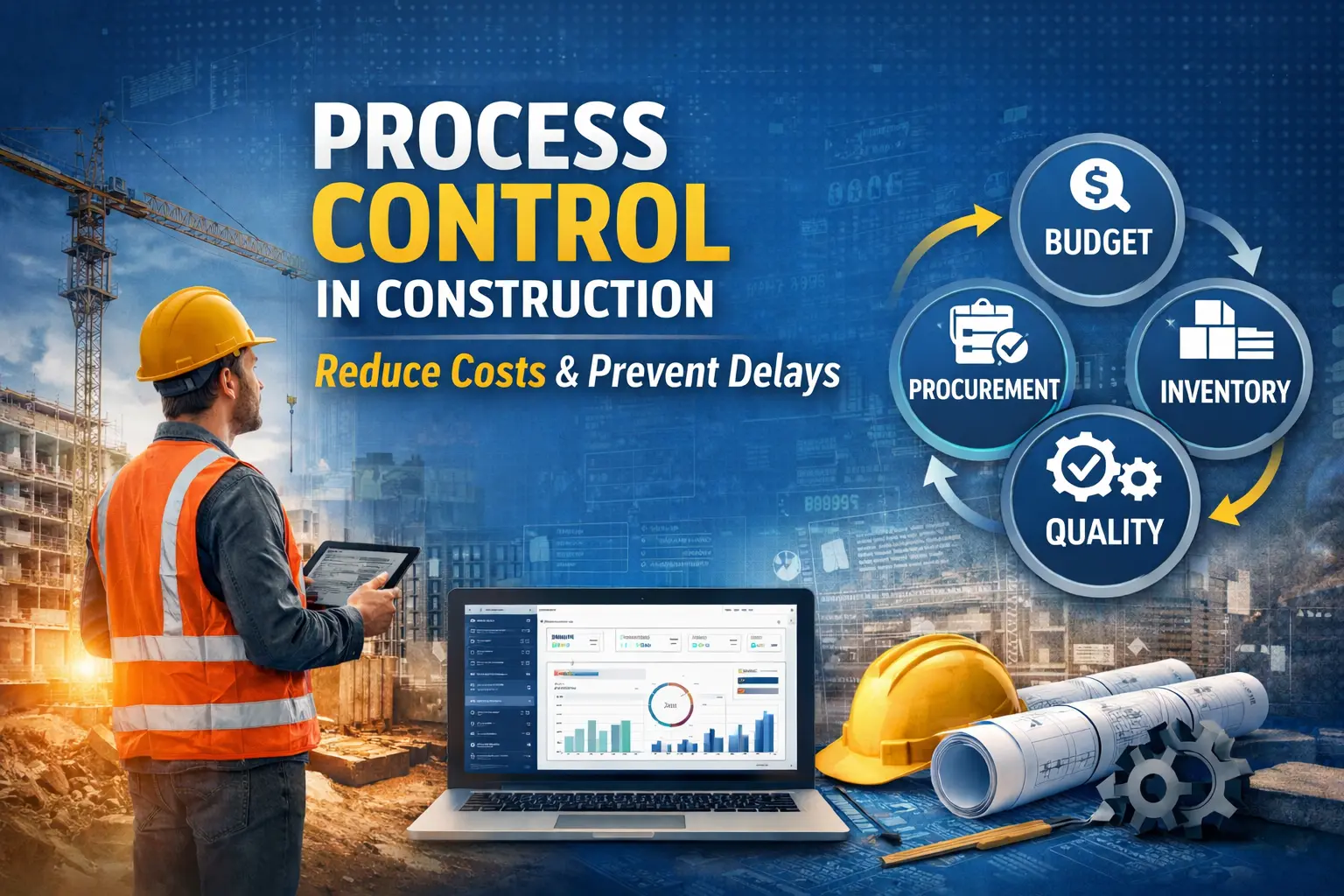
Process Control in Construction: How to Stop Cost Overruns and Project Delays
11 May 2016
Post 02
Top 10 Construction Management Software in India 2026: Which Construction Project Management System Is Right for You?
30 Apr 2026
Post 03
Labour Management System Software for Construction | biCanvas
30 Apr 2026