


 +91-85304 14111




OUR BLOGS
Our Latest Blogs
02 Feb 2026
By Mansi Jha l Construction
Construction ERP Software: The Complete Guide to Controlling Every Project in 2026
The construction industry runs on coordination between sites, teams, materials, equipment, contractors, and cash flow. Yet most construction companies still manage these moving parts through disconnected spreadsheets, WhatsApp messages, and delayed weekly reports. The result is familiar: cost overruns, billing delays, material shortages, and projects that take longer and cost more than planned. This is why searches for construction ERP software have grown significantly in India over the past two years and why companies that have implemented the right system are gaining a measurable competitive advantage over those that haven't. This guide explains what construction ERP software is, what it must do, how to choose the right one, and why purpose-built platforms like biCanvas are replacing generic tools across the industry. What Is Construction ERP Software? Construction ERP software is an integrated platform that connects every function of a construction business project planning, procurement, inventory, finance, HR, equipment management, and compliance into a single, real-time system. The key word is integrated. A construction ERP isn't a collection of separate tools that happen to share data. It's a unified platform where a material issued on site immediately affects project cost, inventory levels, and financial reporting simultaneously, without manual entry. This is what separates modern construction ERP software from older management tools that only track tasks or generate reports after the fact. Why Generic ERP Fails Construction Companies Many construction companies have tried implementing generic ERP systems SAP, Oracle, or Tally extended with plugins and found them expensive, difficult to use, and ultimately inadequate. The reason is straightforward: these platforms are built for manufacturing or trading businesses, not for construction. Construction has unique operational realities that generic ERP simply wasn't designed for: Project-based execution with individual budgets, BOQs, and timelines per project Multi-site operations with materials, labour, and equipment spread across locations RA billing and subcontract management that requires construction-specific workflows Daily Progress Reporting (DPR) directly from site, not from a desktop GST, RERA, and labour compliance requirements specific to India's construction sector A construction industry ERP built around these realities like biCanvas eliminates the need for customization, reduces implementation time, and delivers value much faster than a generic platform adapted to fit. For a detailed comparison of how construction ERP differs across company types, see our guide on Best ERP Software for Construction Industry. The 10 Core Modules Every Construction ERP Software Must Have When evaluating construction ERP software, look beyond the feature list. Assess whether each module reflects how construction actually works not how software vendors wish it worked. 1. Project Planning & Scheduling Work Breakdown Structure (WBS), Gantt charts, milestone tracking, and critical path management. Project managers should be able to see timeline deviations before they become delays, not after. 2. BOQ & Estimation Bill of Quantities management with version control. Every scope change must be tracked, documented, and reflected in revised budgets automatically. Without this, disputes with clients and cost confusion are inevitable. 3. Budgeting & Cost Control Real-time comparison of estimated vs. actual cost, at project level and activity level. The system should flag overruns as they happen not in next month's report. biCanvas enables system-driven controls that can alert or restrict transactions exceeding budget limits. 4. Procurement & Vendor Management From indent to purchase order to GRN fully integrated with project budgets and approvals. Every purchase should trace back to a project activity and be visible to the finance team the moment it's raised. 5. Inventory & Material Management Site-wise inventory tracking, inter-site transfers, material consumption linked to project activities. This module alone can reduce material leakage by 15–20% for most construction companies. See our detailed breakdown in Construction Inventory and Procurement Management. 6. Subcontract & RA Billing Management Automated RA bill generation, approval routing, retention tracking, and payment processing. Manual RA billing is one of the biggest sources of cash flow delay and contractor disputes in Indian construction. 7. Equipment & Asset Management Utilization tracking, maintenance schedules, fuel consumption, inter-site deployment, and equipment-wise cost allocation. For infrastructure contractors, this module directly protects asset value and prevents unplanned downtime. 8. HR, Labour & Payroll Daily labour attendance, wage calculation, PF/ESI compliance, and contractor labour tracking all from site. Critical for projects with large contract workforces. 9. Finance & Accounts GST-compliant invoicing, TDS management, project-wise P&L, cash flow forecasting, and multi-entity consolidation. Finance and operations should live in the same system, not be reconciled weekly across different tools. 10. Mobile & Field Access Site engineers and supervisors work on-site, not at desks. Construction ERP software must work on mobile for DPR submission, material indents, quality checks, and approvals even in locations with limited connectivity. Learn more about how biCanvas's mobile app supports site engineers. Construction ERP Software vs. Construction Management Tools: What's the Difference? This is one of the most common sources of confusion among construction companies evaluating software. Construction management tools (like Procore, Powerplay, or RDash) focus on task tracking, documentation, and site coordination. They are useful but operate in silos disconnected from finance, procurement, and cost control. Construction ERP software connects all of these functions into one system. A material consumed on site flows immediately into inventory records, project cost, and financial accounts without anyone manually entering the data twice. Capability Construction Management Tool Construction ERP Software Task & schedule tracking Yes Yes Site documentation Yes Yes Real-time cost control No Yes Procurement & vendor management No or limited Yes RA billing & subcontracts No Yes Financial accounts & GST No Yes Equipment lifecycle tracking No Yes Multi-project, multi-site visibility Limited Yes For companies managing more than 2–3 projects simultaneously, the limitations of standalone management tools become painful quickly. An integrated construction ERP software is what brings predictability and control back. How Construction ERP Software Controls Cost Overruns Cost overruns are the most persistent problem in construction. The typical cause isn't bad planning it's late visibility. By the time a cost overrun appears in a report, the damage is already done. Construction ERP software changes this by linking execution with budgets in real time: When a purchase order is raised, it immediately reduces the available budget When materials are issued to a site, the cost hits the project account instantly When a subcontractor raises an RA bill, it's visible against the contract value before approval biCanvas extends this further with system-driven workflow controls transactions can be flagged or blocked when they exceed predefined limits. This is the shift from passive reporting to active cost control that most construction companies are looking for. For a quantified look at the savings you can expect, see our Construction ERP ROI Calculator. Who Uses Construction ERP Software in India? Construction ERP software isn't one-size-fits-all. Different company types have different priorities: Building Contractors & Developers BOQ management, subcontract billing, procurement control, and project-wise P&L are the core needs. RERA compliance and sales billing matter for developers. Infrastructure & EPC Companies Multi-project portfolio visibility, equipment lifecycle management, complex RA billing workflows, and GST compliance are essential. Read our in-depth guide: Why Indian Infrastructure Companies Choose the Wrong ERP. Interior Fit-Out & Turnkey Contractors Bill of Materials (BOM), vendor management, project tracking, and client billing are the priorities. HVAC, MEP & Specialty Contractors Work orders, AMC billing, material tracking, and service management are key. Ready-Mix Concrete (RMC) Companies Batching integration, dispatch coordination, fleet management, and plant-level inventory control. See: Best RMC ERP Software in India. Construction ERP Software Implementation: What to Expect One of the biggest fears construction companies have about ERP is implementation complexity. This fear is valid traditional enterprise ERP platforms like SAP can take 12–18 months to implement and cost crores before delivering any value. Modern construction ERP software built for Indian companies takes a different approach. biCanvas, for example, follows a phased implementation methodology: Phase 1 Discovery & Configuration (2–4 weeks) Map your current processes, set up master data, configure project structures and approval workflows. Phase 2 Pilot on 1–2 Active Projects (6–10 weeks) Go live on a limited scope. Real teams, real data. Build confidence before full rollout. Phase 3 Full Rollout (3–6 months total) Expand across all projects, sites, and departments with ongoing training and support. Phase 4 Stabilization & Optimization Fine-tune workflows, add integrations, and embed the system into daily operations. For a full cost breakdown including licensing, implementation, and hidden charges, see our Construction ERP Pricing Guide for India 2026. How to Choose the Right Construction ERP Software Construction-specific modules — Does it have BOQ, RA billing, subcontract management, and site inventory built in from day one, or does everything require customization? India compliance built in — GST e-invoicing, TDS, RERA, and labour law compliance should be standard, not add-ons. Mobile-first field access — Can site engineers use it on Android from a remote location with patchy connectivity? Real-time cost control — Does the system show actual vs. budget in real time, or only after month-end processing? Multi-project, multi-site visibility — Can management see a consolidated view across all projects simultaneously? Workflow automation — Can approval chains, budget alerts, and procurement controls be configured without custom development? Integration with Tally and existing tools — Does it connect with your accounting system without manual double entry? Implementation timeline — Is the vendor committing to 3–6 months or 12–18 months? The difference is real. Vendor expertise in Indian construction — Generic ERP vendors won't understand RA billing cycles, RERA timelines, or site labour compliance. Why biCanvas Is Built Differently Most construction ERP software available in India is either a generic ERP adapted for construction, or a niche tool that handles one part of the problem well but lacks breadth. biCanvas is purpose-built for construction and infrastructure from the ground up. Every module reflects how Indian construction companies actually operate from BOQ and WBS management to equipment mobilization, multi-tier subcontractor billing, site-level DPR, and GST-compliant finance. Nothing requires force-fitting into generic workflows. Key differentiators: Execution-first architecture built for site-to-HO visibility, not just back-office reporting System-driven controls transactions can be flagged or blocked, not just tracked Mobile-first design works in the field, not just on desktops 3–6 month implementation not 12–18 months India-specific compliance GST, RERA, TDS built into the core platform Scalable across verticals construction, infrastructure, RMC, and manufacturing under one system Frequently Asked Questions About Construction ERP Software What is construction ERP software? Construction ERP software is an integrated platform that connects project planning, procurement, inventory, finance, HR, and equipment management into a single real-time system built specifically for construction companies. What is the difference between construction ERP and construction management software? Construction management software handles scheduling and site documentation. Construction ERP connects those functions with cost control, procurement, finance, and compliance giving companies both operational execution and financial visibility in one system. Which is the best construction ERP software in India? The best option depends on your company type and size. biCanvas is consistently ranked among the top choices for Indian construction, infrastructure, and EPC companies due to its purpose-built design, India-specific compliance, and 3–6 month implementation timeline. How much does construction ERP software cost in India? Costs vary by company size and scope. See our detailed Construction ERP Pricing Guide for a full breakdown including licensing, implementation, and hidden costs. How long does it take to implement construction ERP software? With modern platforms like biCanvas, 3–6 months from kickoff to full rollout. Traditional enterprise ERP platforms can take 12–18 months. The difference lies in how much industry-specific configuration comes out of the box. Can construction ERP software handle GST and RERA compliance in India? Yes but only if the platform was built for the Indian market. biCanvas has GST e-invoicing, TDS, and RERA workflows built into the core system, not as add-ons or workarounds. Is construction ERP software cloud-based? Most modern platforms are cloud-based, which enables multi-site access, mobile use from the field, and no on-premise infrastructure costs. biCanvas offers cloud, hybrid, and on-premise options. What is the ROI of implementing construction ERP software? Companies typically see 15–25% reduction in material costs, 20–30% improvement in project delivery timelines, and significantly faster billing cycles. See exact numbers in our Construction ERP ROI Calculator. Ready to Take Control of Your Construction Projects? The construction companies winning in India's 2026 market are not those with the most projects they are the ones with the tightest control over cost, execution, and cash flow. Construction ERP software is the system that makes that control possible. biCanvas is built for exactly this not as a generic platform adapted for construction, but as a purpose-built system designed around how Indian construction companies actually operate. Book a free demo with biCanvas and see how your projects, procurement, inventory, and finance can run from one unified system. Related reading: Construction Project Management Software: How to Take Complete Control Construction Inventory and Procurement Management Construction ERP Pricing India 2026 Construction ERP ROI Calculator Construction ERP Mobile App for Site Engineers Best Construction ERP Software for Infrastructure Companies in India Tags: construction ERP software, ERP software for construction industry, construction industry ERP, ERP for builders India, construction ERP India 2026, biCanvas ERP
Leave A Comment
OUR BLOGS
Our Latest Blogs
02 Feb 2026
By Mansi Jha Construction
Construction ERP Software: The Complete Guide to Controlling Every Project in 2026
The construction industry runs on coordination between sites, teams, materials, equipment, contractors, and cash flow. Yet most construction companies still manage these moving parts through disconnected spreadsheets, WhatsApp messages, and delayed weekly reports. The result is familiar: cost overruns, billing delays, material shortages, and projects that take longer and cost more than planned. This is why searches for construction ERP software have grown significantly in India over the past two years and why companies that have implemented the right system are gaining a measurable competitive advantage over those that haven't. This guide explains what construction ERP software is, what it must do, how to choose the right one, and why purpose-built platforms like biCanvas are replacing generic tools across the industry. What Is Construction ERP Software? Construction ERP software is an integrated platform that connects every function of a construction business project planning, procurement, inventory, finance, HR, equipment management, and compliance into a single, real-time system. The key word is integrated. A construction ERP isn't a collection of separate tools that happen to share data. It's a unified platform where a material issued on site immediately affects project cost, inventory levels, and financial reporting simultaneously, without manual entry. This is what separates modern construction ERP software from older management tools that only track tasks or generate reports after the fact. Why Generic ERP Fails Construction Companies Many construction companies have tried implementing generic ERP systems SAP, Oracle, or Tally extended with plugins and found them expensive, difficult to use, and ultimately inadequate. The reason is straightforward: these platforms are built for manufacturing or trading businesses, not for construction. Construction has unique operational realities that generic ERP simply wasn't designed for: Project-based execution with individual budgets, BOQs, and timelines per project Multi-site operations with materials, labour, and equipment spread across locations RA billing and subcontract management that requires construction-specific workflows Daily Progress Reporting (DPR) directly from site, not from a desktop GST, RERA, and labour compliance requirements specific to India's construction sector A construction industry ERP built around these realities like biCanvas eliminates the need for customization, reduces implementation time, and delivers value much faster than a generic platform adapted to fit. For a detailed comparison of how construction ERP differs across company types, see our guide on Best ERP Software for Construction Industry. The 10 Core Modules Every Construction ERP Software Must Have When evaluating construction ERP software, look beyond the feature list. Assess whether each module reflects how construction actually works not how software vendors wish it worked. 1. Project Planning & Scheduling Work Breakdown Structure (WBS), Gantt charts, milestone tracking, and critical path management. Project managers should be able to see timeline deviations before they become delays, not after. 2. BOQ & Estimation Bill of Quantities management with version control. Every scope change must be tracked, documented, and reflected in revised budgets automatically. Without this, disputes with clients and cost confusion are inevitable. 3. Budgeting & Cost Control Real-time comparison of estimated vs. actual cost, at project level and activity level. The system should flag overruns as they happen not in next month's report. biCanvas enables system-driven controls that can alert or restrict transactions exceeding budget limits. 4. Procurement & Vendor Management From indent to purchase order to GRN fully integrated with project budgets and approvals. Every purchase should trace back to a project activity and be visible to the finance team the moment it's raised. 5. Inventory & Material Management Site-wise inventory tracking, inter-site transfers, material consumption linked to project activities. This module alone can reduce material leakage by 15–20% for most construction companies. See our detailed breakdown in Construction Inventory and Procurement Management. 6. Subcontract & RA Billing Management Automated RA bill generation, approval routing, retention tracking, and payment processing. Manual RA billing is one of the biggest sources of cash flow delay and contractor disputes in Indian construction. 7. Equipment & Asset Management Utilization tracking, maintenance schedules, fuel consumption, inter-site deployment, and equipment-wise cost allocation. For infrastructure contractors, this module directly protects asset value and prevents unplanned downtime. 8. HR, Labour & Payroll Daily labour attendance, wage calculation, PF/ESI compliance, and contractor labour tracking all from site. Critical for projects with large contract workforces. 9. Finance & Accounts GST-compliant invoicing, TDS management, project-wise P&L, cash flow forecasting, and multi-entity consolidation. Finance and operations should live in the same system, not be reconciled weekly across different tools. 10. Mobile & Field Access Site engineers and supervisors work on-site, not at desks. Construction ERP software must work on mobile for DPR submission, material indents, quality checks, and approvals even in locations with limited connectivity. Learn more about how biCanvas's mobile app supports site engineers. Construction ERP Software vs. Construction Management Tools: What's the Difference? This is one of the most common sources of confusion among construction companies evaluating software. Construction management tools (like Procore, Powerplay, or RDash) focus on task tracking, documentation, and site coordination. They are useful but operate in silos disconnected from finance, procurement, and cost control. Construction ERP software connects all of these functions into one system. A material consumed on site flows immediately into inventory records, project cost, and financial accounts without anyone manually entering the data twice. Capability Construction Management Tool Construction ERP Software Task & schedule tracking Yes Yes Site documentation Yes Yes Real-time cost control No Yes Procurement & vendor management No or limited Yes RA billing & subcontracts No Yes Financial accounts & GST No Yes Equipment lifecycle tracking No Yes Multi-project, multi-site visibility Limited Yes For companies managing more than 2–3 projects simultaneously, the limitations of standalone management tools become painful quickly. An integrated construction ERP software is what brings predictability and control back. How Construction ERP Software Controls Cost Overruns Cost overruns are the most persistent problem in construction. The typical cause isn't bad planning it's late visibility. By the time a cost overrun appears in a report, the damage is already done. Construction ERP software changes this by linking execution with budgets in real time: When a purchase order is raised, it immediately reduces the available budget When materials are issued to a site, the cost hits the project account instantly When a subcontractor raises an RA bill, it's visible against the contract value before approval biCanvas extends this further with system-driven workflow controls transactions can be flagged or blocked when they exceed predefined limits. This is the shift from passive reporting to active cost control that most construction companies are looking for. For a quantified look at the savings you can expect, see our Construction ERP ROI Calculator. Who Uses Construction ERP Software in India? Construction ERP software isn't one-size-fits-all. Different company types have different priorities: Building Contractors & Developers BOQ management, subcontract billing, procurement control, and project-wise P&L are the core needs. RERA compliance and sales billing matter for developers. Infrastructure & EPC Companies Multi-project portfolio visibility, equipment lifecycle management, complex RA billing workflows, and GST compliance are essential. Read our in-depth guide: Why Indian Infrastructure Companies Choose the Wrong ERP. Interior Fit-Out & Turnkey Contractors Bill of Materials (BOM), vendor management, project tracking, and client billing are the priorities. HVAC, MEP & Specialty Contractors Work orders, AMC billing, material tracking, and service management are key. Ready-Mix Concrete (RMC) Companies Batching integration, dispatch coordination, fleet management, and plant-level inventory control. See: Best RMC ERP Software in India. Construction ERP Software Implementation: What to Expect One of the biggest fears construction companies have about ERP is implementation complexity. This fear is valid traditional enterprise ERP platforms like SAP can take 12–18 months to implement and cost crores before delivering any value. Modern construction ERP software built for Indian companies takes a different approach. biCanvas, for example, follows a phased implementation methodology: Phase 1 Discovery & Configuration (2–4 weeks) Map your current processes, set up master data, configure project structures and approval workflows. Phase 2 Pilot on 1–2 Active Projects (6–10 weeks) Go live on a limited scope. Real teams, real data. Build confidence before full rollout. Phase 3 Full Rollout (3–6 months total) Expand across all projects, sites, and departments with ongoing training and support. Phase 4 Stabilization & Optimization Fine-tune workflows, add integrations, and embed the system into daily operations. For a full cost breakdown including licensing, implementation, and hidden charges, see our Construction ERP Pricing Guide for India 2026. How to Choose the Right Construction ERP Software Construction-specific modules — Does it have BOQ, RA billing, subcontract management, and site inventory built in from day one, or does everything require customization? India compliance built in — GST e-invoicing, TDS, RERA, and labour law compliance should be standard, not add-ons. Mobile-first field access — Can site engineers use it on Android from a remote location with patchy connectivity? Real-time cost control — Does the system show actual vs. budget in real time, or only after month-end processing? Multi-project, multi-site visibility — Can management see a consolidated view across all projects simultaneously? Workflow automation — Can approval chains, budget alerts, and procurement controls be configured without custom development? Integration with Tally and existing tools — Does it connect with your accounting system without manual double entry? Implementation timeline — Is the vendor committing to 3–6 months or 12–18 months? The difference is real. Vendor expertise in Indian construction — Generic ERP vendors won't understand RA billing cycles, RERA timelines, or site labour compliance. Why biCanvas Is Built Differently Most construction ERP software available in India is either a generic ERP adapted for construction, or a niche tool that handles one part of the problem well but lacks breadth. biCanvas is purpose-built for construction and infrastructure from the ground up. Every module reflects how Indian construction companies actually operate from BOQ and WBS management to equipment mobilization, multi-tier subcontractor billing, site-level DPR, and GST-compliant finance. Nothing requires force-fitting into generic workflows. Key differentiators: Execution-first architecture built for site-to-HO visibility, not just back-office reporting System-driven controls transactions can be flagged or blocked, not just tracked Mobile-first design works in the field, not just on desktops 3–6 month implementation not 12–18 months India-specific compliance GST, RERA, TDS built into the core platform Scalable across verticals construction, infrastructure, RMC, and manufacturing under one system Frequently Asked Questions About Construction ERP Software What is construction ERP software? Construction ERP software is an integrated platform that connects project planning, procurement, inventory, finance, HR, and equipment management into a single real-time system built specifically for construction companies. What is the difference between construction ERP and construction management software? Construction management software handles scheduling and site documentation. Construction ERP connects those functions with cost control, procurement, finance, and compliance giving companies both operational execution and financial visibility in one system. Which is the best construction ERP software in India? The best option depends on your company type and size. biCanvas is consistently ranked among the top choices for Indian construction, infrastructure, and EPC companies due to its purpose-built design, India-specific compliance, and 3–6 month implementation timeline. How much does construction ERP software cost in India? Costs vary by company size and scope. See our detailed Construction ERP Pricing Guide for a full breakdown including licensing, implementation, and hidden costs. How long does it take to implement construction ERP software? With modern platforms like biCanvas, 3–6 months from kickoff to full rollout. Traditional enterprise ERP platforms can take 12–18 months. The difference lies in how much industry-specific configuration comes out of the box. Can construction ERP software handle GST and RERA compliance in India? Yes but only if the platform was built for the Indian market. biCanvas has GST e-invoicing, TDS, and RERA workflows built into the core system, not as add-ons or workarounds. Is construction ERP software cloud-based? Most modern platforms are cloud-based, which enables multi-site access, mobile use from the field, and no on-premise infrastructure costs. biCanvas offers cloud, hybrid, and on-premise options. What is the ROI of implementing construction ERP software? Companies typically see 15–25% reduction in material costs, 20–30% improvement in project delivery timelines, and significantly faster billing cycles. See exact numbers in our Construction ERP ROI Calculator. Ready to Take Control of Your Construction Projects? The construction companies winning in India's 2026 market are not those with the most projects they are the ones with the tightest control over cost, execution, and cash flow. Construction ERP software is the system that makes that control possible. biCanvas is built for exactly this not as a generic platform adapted for construction, but as a purpose-built system designed around how Indian construction companies actually operate. Book a free demo with biCanvas and see how your projects, procurement, inventory, and finance can run from one unified system. Related reading: Construction Project Management Software: How to Take Complete Control Construction Inventory and Procurement Management Construction ERP Pricing India 2026 Construction ERP ROI Calculator Construction ERP Mobile App for Site Engineers Best Construction ERP Software for Infrastructure Companies in India Tags: construction ERP software, ERP software for construction industry, construction industry ERP, ERP for builders India, construction ERP India 2026, biCanvas ERP
Leave A Comment
OUR BLOGS
Our Latest Blogs
10 Dec 2025
By Mansi Jha Infrastructure
10 Best Infrastructure ERP Solutions for 2026 (Updated List)
Table of Contents Introduction: Why Infrastructure Companies Need ERP in 2026 Top 10 Best Infrastructure ERP Software — Full List Comparison Table: Feature-by-Feature Review Which ERP Is Best for Your Company Type? biCanvas — Why It Ranks #1 for Infrastructure Core Modules to Look For Implementation Timeline & Total Cost of Ownership FAQ Introduction: Why Infrastructure Companies Need ERP in 2026 Infrastructure projects in India operate at extraordinary scale and complexity: Managing 15-200+ multi-site projects simultaneously Coordinating equipment fleets worth hundreds of crores Daily WIP updates and BOQ alignment Multi-tier subcontractor management and RA billing Material planning across geographically dispersed sites Statutory compliance (GST, environmental clearances, safety regulations) Equipment lifecycle tracking and preventive maintenance Real-time project health monitoring and financial control Traditional approaches using spreadsheets, disconnected software, and manual reporting create operational chaos. Infrastructure companies adopt ERP systems to prevent cost overruns, maintain project timelines, ensure BOQ accuracy, optimize resource utilization, and strengthen financial visibility across portfolios. Top 10 Best Infrastructure ERP Software (2026) Note: This list highlights enterprise-grade solutions designed for mid-to-large infrastructure contractors, EPC firms, and government infrastructure agencies. biCanvas ranks #1 for comprehensive infrastructure project management. 1. biCanvas — Best Overall Infrastructure ERP biCanvas is a purpose-built enterprise ERP specifically designed for infrastructure, construction, EPC firms, and large contractors managing complex, multi-site operations. Why biCanvas Leads: Built-for-infrastructure architecture with WBS, BOQ, equipment lifecycle, procurement, WIP, and financial controls—all integrated without requiring add-ons Real-time site-to-HO visibility through mobile-first applications working seamlessly even in remote locations Advanced workflow engine handling complex approval chains without custom coding Multi-entity consolidation with project-level P&L providing CFO-grade financial visibility Deep integration ecosystem (Tally, Oracle, SAP, IoT, GPS) with pre-built connectors Indian market expertise with GST, RERA built into core platform Proven 3-6 month implementation timeline Best For: Mid-to-large infrastructure contractors, highway/bridge projects, metro rail, power plants, water/irrigation projects, EPC contractors 2. SAP S/4HANA for Engineering, Construction & Operations SAP's infrastructure solution offers enterprise-grade capabilities with strong financial management. Comprehensive platform with extensive functionality, though implementation complexity and 6-18 month timelines are considerations for mid-sized firms. Best For: Large multinational infrastructure firms, government mega projects requiring global standardization 3. Oracle Primavera Cloud Oracle Primavera excels at complex infrastructure scheduling and portfolio management. Particularly strong for program-level oversight, though companies often need to combine it with other systems for complete ERP functionality. Best For: Large infrastructure portfolios, government agencies, program management offices focused on scheduling excellence 4. Procore Procore offers a modern, cloud-based platform with excellent field collaboration features. Popular for quick adoption, though it requires third-party integrations for deeper infrastructure-specific needs like RA billing and equipment lifecycle management. Best For: Mid-to-large contractors prioritizing field adoption and collaboration 5. In4Suite (In4Velocity) In4Suite provides solid project controls with particular strength in Middle East and Asian markets. Offers reasonable functionality at competitive pricing, making it practical for regional contractors. Best For: Regional contractors, mid-sized infrastructure firms in Asia and Middle East 6. CMiC CMiC offers an all-in-one platform built on single database architecture, ensuring data consistency. Mature solution with comprehensive features, though some users find the interface less modern. Best For: Large contractors seeking complete integration and willing to invest in longer implementation 7. Viewpoint Vista Viewpoint brings deep construction industry experience with strong financial and job costing capabilities. Reliable choice with good industry-specific features, though primarily focused on North American market. Best For: Contractors needing strong financial controls, particularly those with North American operations 8. Acumatica Construction Edition Acumatica's unlimited user licensing model and modern cloud architecture make it attractive for collaborative infrastructure projects. Good value for growing companies, though infrastructure-specific features require customization. Best For: Growing contractors prioritizing collaboration and scalable pricing 9. Jonas Premier Jonas provides integrated service and project management particularly suitable for infrastructure maintenance contractors. Practical solution for service-oriented operations. Best For: Service-oriented infrastructure contractors, maintenance operations, facilities management 10. Hexagon EAM Hexagon specializes in infrastructure asset management over the complete lifecycle. Excellent choice for organizations focused on long-term infrastructure maintenance and operations. Best For: Government agencies, utilities, infrastructure asset owners managing long-term maintenance Comparison Table — Feature-by-Feature Review Capability / Feature biCanvas SAP S/4HANA Oracle Primavera Procore In4Suite BOQ & WBS Management Strong, versioned Via PS module Excellent scheduling Via integrations Strong WIP & DPR (Real-time) Mobile-first Via integrations Limited Mobile logs Mobile support Equipment Lifecycle + IoT Strong + telematics Add-on modules Via partners Limited Add-on Subcontractor RA Billing Automated workflows Via FI/PS Limited Basic Strong Procurement & Indent Site/HO integrated Full ERP suite Via partners Basic Yes Multi-Entity Consolidation Strong Strong Strong No Yes Workflow Automation Visual, no coding Requires development Configurable Basic Basic Mobile-First Design Yes, cloud-based Add-on apps Mobile app Strong Mobile support Implementation Speed 3-6 months 6-18 months 4-12 months 3-9 months 2-6 months India-Specific Features GST, RERA built-in Requires localization Requires customization Limited Some support Best Fit Mid to Large infrastructure Very large enterprise Large portfolios Mid-Large projects Mid-Enterprise Which ERP Is Best for Your Company Type? A. Highway & Road Construction Needs: Multi-site coordination, equipment fleet optimization, material planning, milestone-based billing Why biCanvas: Purpose-built equipment lifecycle management tracks utilization without add-ons. Intersite material tracking prevents shortages. Mobile-first field operations work seamlessly in remote locations. B. Metro Rail & Mass Transit Needs: Complex phasing, multiple contractor coordination, TBM management, public accountability Why biCanvas: Comprehensive project controls handle multi-contractor coordination seamlessly. Equipment management extends to specialized machinery. Built-in compliance tracking ensures regulatory requirements are met. C. Bridge & Flyover Projects Needs: Design coordination, precast/RMC integration, pier-by-pier tracking, quality documentation Why biCanvas: Integrated approach connects design, production, and site operations without multiple systems. Progress tracking at granular levels comes standard. D. Power Plants & Industrial Infrastructure Needs: Multi-discipline coordination, equipment procurement tracking, commissioning management Why biCanvas: EPC workflows handle multi-discipline coordination naturally. Equipment lifecycle extends from procurement through commissioning. E. Water & Irrigation Projects Needs: Geographic spread, environmental compliance, multiple package management Why biCanvas: Multi-site management handles geographically dispersed projects efficiently. Compliance tracking addresses environmental requirements. biCanvas — Why It Ranks #1 for Infrastructure biCanvas stands apart because it was built from the ground up to handle the specific complexities of infrastructure execution in the Indian context. While other ERPs are either too generic or require extensive customization, biCanvas delivers infrastructure-specific functionality ready to deploy. Key Differentiators Built-for-Infrastructure Architecture Every module reflects how infrastructure projects actually work—from WBS and BOQ management to equipment mobilization, procurement cycles, progress measurement, and contractor billing. You don't need to force-fit generic workflows or wait months for customization. Real-Time Site-to-HO Integration Mobile-first applications mean field engineers can update progress, record material consumption, capture quality checks, and request approvals even in remote locations with connectivity. The cloud-based system ensures data is available in real-time across teams. Advanced Workflow Automation Without Coding Visual workflow builder enables complex, multi-level approval chains for procurement, contractor billing, design changes, and budget variations. Configure sophisticated workflows yourself without waiting for developers. Equipment & Asset Intelligence Equipment lifecycle management tracks utilization, maintenance schedules, fuel consumption, and costs from day one. IoT integration enables predictive maintenance and real-time location tracking—capabilities other ERPs offer only through expensive add-ons. Financial Control & Visibility Project-level P&L, cost center tracking, cash flow forecasting, and working capital management provide CFO-grade financial visibility without complex configuration. Multi-entity consolidation supports complex organizational structures naturally. India-Ready Compliance GST workflows, TDS calculation, RERA requirements, and statutory reporting are built into the core platform. Updates for regulatory changes happen automatically—you're not waiting for vendors to develop localization patches. Scalable Implementation Approach Proven methodology allows phased rollout starting with pilot projects, minimizing disruption while building organizational confidence. You see value in 3-6 months, not 12-18 months. Core Modules Project Planning & Scheduling (WBS, Gantt charts, critical path) BOQ & Estimation with version control Work-in-Progress (WIP) & Daily Progress Reporting (DPR) with mobile capture Procurement Management (indent, PO, GRN workflows) Subcontractor Management with RA billing automation Inventory & Material Management (intersite transfers, consumption tracking) Equipment & Asset Lifecycle with preventive maintenance and IoT integration Financial Management (project accounting, cost centers, cash flow) Quality Management (inspections, testing, compliance documentation) Document Management (drawings, RFIs, approvals, change orders) Analytics & Dashboards (real-time KPIs, custom reports) Core Modules to Look For in Infrastructure ERP Module / Capability Why It Matters Project Planning & Scheduling Infrastructure projects involve thousands of interdependent activities. Robust scheduling ensures realistic timelines and enables proactive delay management. BOQ & Estimation with Version Control Scope changes are inevitable. Versioned BOQ management tracks all variations, maintains budget alignment, and prevents disputes. WIP & Daily Progress Reporting Real-time visibility enables early detection of delays, cost overruns, or quality issues for informed decision-making. Equipment & Machinery Lifecycle Infrastructure requires significant capital investment in equipment. Tracking utilization, maintenance, and costs optimizes asset value and prevents downtime. Procurement & Material Management Timely material availability across multiple sites prevents delays that cascade through schedules. Subcontractor Management with RA Billing Automated workflows, approval routing, and payment tracking improve transparency and accelerate payment cycles. Financial Management Accurate financial tracking at project level enables profitability monitoring and cash flow management. Mobile Access & Cloud Capabilities Site engineers work in remote locations. Cloud-based mobile apps ensure continuous operations and timely data capture across teams. Workflow Automation Complex approval chains require systematic workflows to ensure control, accountability, and speed. Statutory Compliance Infrastructure projects must comply with multiple regulations. Built-in compliance workflows reduce risk of penalties. Implementation Timeline & Total Cost of Ownership Implementation Timeline Phase biCanvas SAP S/4HANA Oracle Primavera Procore Discovery & Planning 2-4 weeks 4-8 weeks 4-6 weeks 2-4 weeks Pilot (1-2 projects) 8-12 weeks 12-20 weeks 8-16 weeks 6-10 weeks Rollout (Scale) 3-6 months 6-18 months 6-12 months 3-9 months Stabilization 4-8 weeks 8-16 weeks 6-12 weeks 4-8 weeks Total Cost of Ownership (TCO) Mid-sized Infrastructure Firms (10-30 projects): First Year TCO: ₹40 Lakh - ₹1.2 Cr Ongoing Annual: ₹15-40 Lakh Large Infrastructure Contractors (30+ projects): First Year TCO: ₹1.2-5 Cr Ongoing Annual: ₹40 Lakh - 1.5 Cr Return on Investment: 15-25% reduction in project overruns 20-30% faster billing and payment cycles 10-15% improvement in equipment utilization Payback period: 18-36 months biCanvas Advantage: Purpose-built infrastructure focus means less customization expense, faster implementation, and quicker ROI realization—often 6-12 months faster than platforms requiring extensive configuration. FAQ 1. What is infrastructure ERP and why do infrastructure companies need it? Infrastructure ERP is specialized software that integrates project planning, execution, equipment management, procurement, financial controls, and compliance across complex, multi-site infrastructure projects. Companies need ERP to manage scale and complexity, prevent cost overruns, optimize resource utilization, ensure compliance, and maintain visibility across dispersed operations. 2. Which is the best infrastructure ERP software in India for 2026? biCanvas consistently ranks #1 for Indian infrastructure companies due to its purpose-built design for infrastructure workflows, comprehensive out-of-the-box functionality, India-specific compliance built into the core platform, proven 3-6 month implementation methodology, and complete integration of field and office operations. 3. How does infrastructure ERP differ from construction ERP? Infrastructure ERP specifically addresses large-scale, long-duration projects involving heavy equipment fleets, geographic dispersion, complex logistics, environmental compliance, and public accountability. biCanvas covers both construction and infrastructure comprehensively with specialized features for equipment fleet management, surveying integration, and multi-jurisdictional regulatory compliance. 4. What modules are essential in infrastructure ERP software? Essential modules include project planning and scheduling, BOQ management with version control, real-time WIP tracking, equipment lifecycle management with IoT integration, procurement and material management, subcontractor RA billing with automated workflows, financial management with project-level P&L, and mobile field applications with cloud connectivity. biCanvas includes all these modules integrated from the start. 5. How long does it take to implement infrastructure ERP? biCanvas typically requires 3-6 months for pilot implementation followed by phased rollout—considerably faster than enterprise platforms requiring 6-18 months. The faster timeline comes from purpose-built infrastructure functionality that doesn't require extensive customization. 6. Can infrastructure ERP handle multiple projects across different locations? Yes, modern infrastructure ERPs like biCanvas are specifically designed for multi-site, multi-project operations from the ground up. They provide centralized visibility while enabling local autonomy, support intersite material transfers, and enable standardized workflows across all locations. 7. How does infrastructure ERP improve equipment utilization? Infrastructure ERP tracks equipment location, utilization hours, maintenance schedules, fuel consumption, and costs in real-time. biCanvas' equipment module includes IoT integration for automatic data capture and predictive maintenance alerts—capabilities other ERPs offer only through expensive third-party add-ons. 8. Does infrastructure ERP support GST and Indian compliance requirements? Leading infrastructure ERPs like biCanvas have GST workflows, TDS calculations, RERA compliance, and statutory reporting built into the core platform from day one. With biCanvas, regulatory updates are automatically incorporated—you're not waiting for vendors to develop patches. 9. How does infrastructure ERP help with subcontractor management? Infrastructure ERP automates subcontractor workflows including work order management, progress measurement, RA bill generation with approval routing, retention tracking, and payment processing. biCanvas handles complex RA billing scenarios that require customization in generic ERPs. 10. Can infrastructure ERP integrate with existing accounting systems like Tally? Yes, biCanvas provides pre-built integrations with popular accounting systems including Tally, Oracle, and SAP. These integrations enable seamless financial data flow and eliminate double entry. biCanvas' pre-built connectors work immediately, unlike platforms where integration requires months of custom development. 11. What is the ROI of implementing infrastructure ERP? Well-implemented infrastructure ERPs typically deliver 15-25% reduction in cost overruns, 20-30% faster cash cycles, and 10-15% better equipment utilization. biCanvas users often see faster ROI due to quicker implementation (3-6 months vs 12-18 months) and lower customization requirements. 12. How does infrastructure ERP support mobile field operations? biCanvas provides mobile-first applications with cloud connectivity as standard. Site engineers can update progress, record material consumption, capture quality checks, request approvals, and access drawings through their mobile devices. Data is available in real-time across teams. 13. Is cloud-based or on-premise infrastructure ERP better for 2026? Cloud-based infrastructure ERP offers faster deployment, lower upfront costs, automatic updates, and easier multi-site access—making it the preferred choice for most organizations in 2026. biCanvas offers cloud, hybrid, and on-premise deployment options for maximum flexibility. 14. How does infrastructure ERP handle project variations and change orders? Infrastructure ERP provides systematic change management workflows that track variation requests, route approvals automatically, update BOQ and budgets, maintain version history, and link financial impacts to project P&L. biCanvas handles this without customization—it's built into how the system works. 15. What training and support is needed for infrastructure ERP implementation? Successful implementation requires structured training for all user groups tailored to their specific roles. biCanvas provides comprehensive training and change management as integral parts of the implementation methodology—not optional extras—because user adoption determines implementation success. Conclusion Selecting the right infrastructure ERP is a strategic decision that impacts every aspect of your operations—from site execution to financial control to long-term competitiveness. biCanvas stands out as the most comprehensive, purpose-built solution for infrastructure companies operating in India. Its deep understanding of infrastructure workflows, India-specific compliance built into the core platform, rapid 3-6 month implementation, complete field-to-office integration, and proven track record make it the preferred choice for mid-to-large infrastructure contractors seeking genuine transformation. Whether you're building highways, bridges, metro systems, power plants, or water infrastructure, the right ERP system provides the foundation for improved efficiency, better decision-making, and sustainable growth. The difference between choosing a purpose-built solution like biCanvas versus adapting generic platforms often becomes clear within months—in project outcomes, team adoption, and bottom-line results. Ready to transform your infrastructure operations? Discover how biCanvas can provide complete visibility and control across your projects without the complexity and delays of traditional ERP implementations. Book your free demo now.
OUR BLOGS
Our Latest Blogs
20 Jan 2026
By Mansi Jha Manufacturing
Cloud-Based ERP Solutions for Manufacturing: Driving Efficiency, Control, and Scalable Growth
Manufacturing businesses today operate under constant pressure to improve efficiency, control costs, and scale operations without increasing complexity. Yet many organizations still rely on disconnected systems, spreadsheets, and manual coordination between production, procurement, inventory, and finance. These gaps often lead to delayed decisions, excess inventory, production bottlenecks, and margin leakage. This is where cloud-based ERP solutions for manufacturing play a transformative role. By unifying core manufacturing processes into a single, real-time platform, cloud ERP enables manufacturers to gain execution-level visibility, enforce process discipline, and respond faster to operational deviations. Modern platforms like biCanvas are designed specifically for complex manufacturing environments—supporting production planning, WIP tracking, inventory control, equipment lifecycle management, procurement workflows, and integrated financial oversight. More importantly, they move ERP beyond reporting into active execution control, helping manufacturers protect margins and scale sustainably. Key Features of Cloud-Based ERP Systems Cloud-based ERP systems are built to centralize manufacturing operations while remaining flexible and scalable. Unlike legacy on-premise systems, cloud ERP platforms provide continuous access to real-time data across plants, warehouses, and departments. Core features typically include production planning, BOM management, inventory visibility, procurement automation, equipment management, and financial integration. biCanvas extends these capabilities by embedding approvals, validations, and workflow controls directly into operational transactions—ensuring that deviations are addressed at the source, not after financial impact has already occurred. Role-based dashboards, audit trails, and real-time alerts allow management teams to monitor performance without depending on delayed reports or manual follow-ups. Benefits of Implementing Cloud-Based ERP in Manufacturing One of the most significant benefits of cloud-based ERP in manufacturing is end-to-end visibility. Production status, material consumption, inventory levels, and cost impact are visible in real time, enabling proactive decision-making instead of reactive corrections. Cloud ERP also improves cross-functional coordination. Production, procurement, maintenance, and finance teams operate on a single source of truth, reducing reconciliation effort and eliminating conflicting data. This alignment directly improves planning accuracy and execution reliability. Scalability is another critical advantage. As manufacturers expand into new plants, product lines, or regions, cloud ERP systems scale without heavy infrastructure investment—making growth faster and more predictable. How Cloud-Based ERP Enhances Operational Efficiency Operational inefficiencies often stem from delayed approvals, poor material planning, and lack of execution-level tracking. Cloud-based ERP systems enhance efficiency by standardizing workflows and automating decision checkpoints. Production schedules become more reliable when material availability, machine capacity, and labor constraints are visible in advance. Procurement is triggered based on actual demand rather than assumptions, reducing overstocking and emergency purchases. Real-time WIP tracking ensures deviations in output or consumption are identified early. With platforms like biCanvas, transactions that violate budgets, approvals, or process rules can be flagged—or blocked—before they escalate into financial losses. This shift from passive reporting to active operational control is where efficiency gains truly compound. Challenges of Transitioning to Cloud-Based ERP Despite its advantages, transitioning to a cloud-based ERP system requires careful planning. Resistance to change is common, particularly in manufacturing environments accustomed to legacy processes or informal workarounds. Data migration and system integration also require structured execution. Historical data must be validated, and integrations with machines, quality systems, or third-party tools must be planned carefully. However, these challenges are temporary. With phased implementation, role-based training, and strong change management, manufacturers can achieve faster adoption and long-term operational stability. Selecting the Right Cloud-Based ERP Solution for Your Manufacturing Business Not all ERP platforms are designed for manufacturing execution. Selecting the right solution requires evaluating depth of operational control, not just feature checklists. Manufacturers should assess whether the ERP supports real production workflows, inventory accuracy, procurement governance, equipment tracking, and financial visibility in a single system. biCanvas is built for environments where execution discipline and cost control are critical—not just reporting. Equally important is scalability and vendor expertise. A manufacturing ERP should grow with the business while continuing to support complex operational requirements. Case Studies: Successful Implementations of Cloud-Based ERP Manufacturing organizations adopting cloud-based ERP systems consistently report measurable improvements: 20–30% reduction in inventory carrying costs due to improved demand visibility 15–25% improvement in production schedule adherence through real-time WIP tracking 30–40% reduction in manual reporting effort, enabling faster decision-making Manufacturers using execution-driven ERP platforms like biCanvas often identify cost overruns within days rather than weeks—allowing corrective action before margins are impacted. The key factor behind success is not just automation, but early detection and control of deviations. Future Trends in Cloud-Based ERP for Manufacturing The future of manufacturing ERP is increasingly intelligent and predictive. Artificial intelligence and machine learning are being embedded into ERP platforms to support demand forecasting, preventive maintenance, and anomaly detection. Sustainability tracking is also becoming a standard ERP capability, enabling manufacturers to monitor energy usage, material waste, and environmental impact. Cloud-based ERP systems are evolving into strategic platforms that support long-term operational resilience and compliance. Integrating Cloud-Based ERP with Other Technologies Cloud ERP systems increasingly integrate with IoT, mobile platforms, and analytics tools. IoT integration enables real-time monitoring of equipment performance, while mobile ERP access allows supervisors to capture data directly from the shop floor. Platforms like biCanvas are designed to unify these inputs into a single operational view—connecting production, inventory, finance, and equipment data for faster, more accurate decision-making. Conclusion: The Future of Manufacturing with Cloud-Based ERP Solutions Cloud-based ERP solutions are no longer optional for manufacturing businesses aiming to remain competitive. They provide the foundation for operational visibility, execution control, and scalable growth. By choosing a manufacturing-focused ERP like biCanvas, organizations move beyond delayed reporting toward real-time control—identifying issues early, protecting margins, and building disciplined, data-driven operations. As manufacturing complexity continues to increase, cloud ERP will be the backbone of efficient, resilient, and profitable manufacturing enterprises.
OUR BLOGS
Our Latest Blogs
08 Dec 2025
By Mansi Jha Ready Mix Concrete
Best Ready Mix Concrete ERP (RMC ERP) in 2026 — Complete Guide
The Ready-Mix Concrete industry has always operated under pressure — tight timelines, strict mix-design requirements, real-time dispatch coordination, unpredictable delays, rising material costs, and the responsibility of delivering consistent quality to every site. In 2026, the complexity has only increased. Customers expect faster deliveries, tighter quality control, and complete traceability, while RMC companies need better control over batching, logistics, and cost to stay profitable. This is where Ready Mix Concrete ERP (RMC ERP) systems play a crucial role. Unlike generic ERPs, RMC-focused solutions are designed specifically to handle batching, raw material planning, fleet management, delivery scheduling, mix-design control, silo-level inventory, and quality assurance. A modern RMC ERP not only improves operational stability but also reduces wastage, prevents errors, and brings transparency across plants. This guide explores the 10 best Ready-Mix Concrete ERP software solutions in 2026, evaluated on depth, reliability, scalability, and real-world usefulness. Why RMC Businesses Are Moving to ERP in 2026 Managing an RMC business manually is becoming increasingly difficult. Plants run multiple batches per hour, fleets are constantly on the move, mix designs need precision, and customers demand instant updates. Plant operators, dispatch teams, supervisors, and accounts teams often struggle with disconnected systems — spreadsheets, WhatsApp messages, handwritten delivery slips, and offline batching reports. RMC ERP solves these challenges by standardizing mix designs, coordinating dispatch in real time, preventing raw material shortages, reducing billing errors, and providing end-to-end visibility — from batching to delivery. Companies adopting RMC ERP in 2026 are seeing a clear improvement in operational efficiency, faster deliveries, reduced wastage, and better cash flow. How We Selected the Top RMC ERP Solutions Every ERP listed in this article was evaluated based on several core parameters: batching integration capability, material consumption tracking, delivery scheduling and fleet management, quality control depth, multi-plant scalability, financial integration, ease of implementation, mobile accessibility, and overall cost-value ratio. Our goal was to highlight platforms that genuinely understand the realities of RMC operations and deliver measurable improvements. 1. biCanvas ERP — Best Overall RMC ERP for 2026 biCanvas stands out because of how well it connects the entire lifecycle of ready-mix operations. While it is widely used across construction, infrastructure, supply chain, and manufacturing, its workflow depth makes it naturally strong for RMC businesses. It brings batching, materials, dispatch, equipment, and financials under one ecosystem, making it suitable for both single-plant operators and large multi-plant companies. The system offers real-time visibility of plant production, inventory levels, order status, and fleet movement. Its dispatch workflows help reduce delays caused by poor coordination, while built-in financial controls ensure every load is tracked until invoicing. What makes biCanvas particularly effective is how smoothly it handles multi-department connectivity — something many RMC companies struggle with when using fragmented systems. The platform doesn’t feel promotional or pushy; instead, it fits organically into the operational needs most RMC companies already recognize. 2. Inntech RMC ERP — Ideal for Small and Mid-Sized Operators Inntech provides an easy-to-understand interface, basic batching integration, and simple inventory management—making it suitable for companies just transitioning from manual operations. It is affordable, quick to deploy, and handles essential workflows without overwhelming teams. While not as comprehensive as enterprise-grade systems, it meets the needs of smaller plants effectively. 3. ReadyMix ERP (TMS) — Strong for Quality-Driven Environments Companies that prioritize mix-design accuracy and testing often choose ReadyMix ERP. It offers strong QC workflows, batch-wise quality records, automated delivery notes, and compliance documentation. Plants with tight quality requirements benefit greatly from its structured reporting and traceability features. 4. QCRETE ERP — Best for Multi-Location Enterprises QCRETE suits organizations operating several RMC plants across regions. Its central dashboards make it easy for management to monitor material consumption, plant performance, and delivery patterns across units. The system also includes advanced QC features, though it requires a longer implementation period and slightly higher investment. 5. E-ReadyMix ERP — Focused on Dispatch & Delivery Optimization This ERP is favored by companies where delivery timelines are the biggest challenge. The software provides route planning, GPS tracking, and dispatch automation, helping teams reduce delays and manage peak hours more efficiently. Its strength lies more on the logistics side than in deep manufacturing workflows. 6. TRANSFLOW RMC ERP — Best for Fleet-Heavy Operations TRANSFLOW is designed for companies managing large fleets of transit mixers, pump trucks, and material carriers. Its dispatch engine and real-time vehicle tracking allow operations teams to maximize fleet utilization. It performs especially well in high-volume RMC markets where vehicle movement directly affects profitability. 7. ERPNext (Customized for RMC) — Flexible and Cost-Efficient ERPNext is an open-source platform that becomes useful when customized for RMC. It can manage sales orders, batching reports, material usage, and billing, but requires development support to match the depth of purpose-built RMC ERPs. It works best for smaller businesses with budget limitations and simple workflows. 8. ReadyMix360 — Best Lightweight Cloud-Native Option ReadyMix360 is cloud-based, modern, and easy to learn. It fits companies looking for a clean UI and quick deployment. Although feature depth is moderate compared to enterprise-grade platforms, it covers essential workflows effectively. 9. CIMS RMC ERP — Strongest for Quality & Testing Records CIMS is known for its comprehensive QC module. It enables plants to maintain detailed records of slump tests, cube tests, mix variations, and compliance logs. Companies that must follow strict quality documentation standards often prefer this system. 10. Propel RMC Suite — Best for Basic Workflow Digitalization Propel offers straightforward features for batching, invoicing, and material tracking. It is suitable for small plants that need digital structure without extensive automation or high-level analytics. It provides a good starting point for early-stage RMC companies. Choosing the Right RMC ERP Selecting the right ERP depends on plant size, production volume, and operational complexity. For quality-driven plants, QC modules are essential. For businesses focused on timely deliveries, fleet and dispatch optimization are priorities. Multi-plant operations require centralized dashboards and consolidated reporting. Modern RMC operations benefit from connected, mobile-first platforms that reduce errors and streamline operations. Why biCanvas ERP Stands Out Among all RMC ERPs, biCanvas is uniquely positioned. It combines end-to-end operational visibility, mobile-first workflows, financial integration, and plant-to-office connectivity. With biCanvas, managers can track production, fleet, inventory, and costs in real time — without juggling multiple tools. The platform is scalable, cloud-native, and built for growth, making it the preferred choice for RMC companies aiming for efficiency, accuracy, and profitability. Take Action Now If your RMC business is ready to eliminate manual inefficiencies, ensure consistent quality, and gain complete visibility across plants, it’s time to explore the possibilities with biCanvas. Book a demo today and experience how a purpose-built RMC ERP can transform your operations and profitability.
Search
Blog Categories
Recent Posts
Post 01
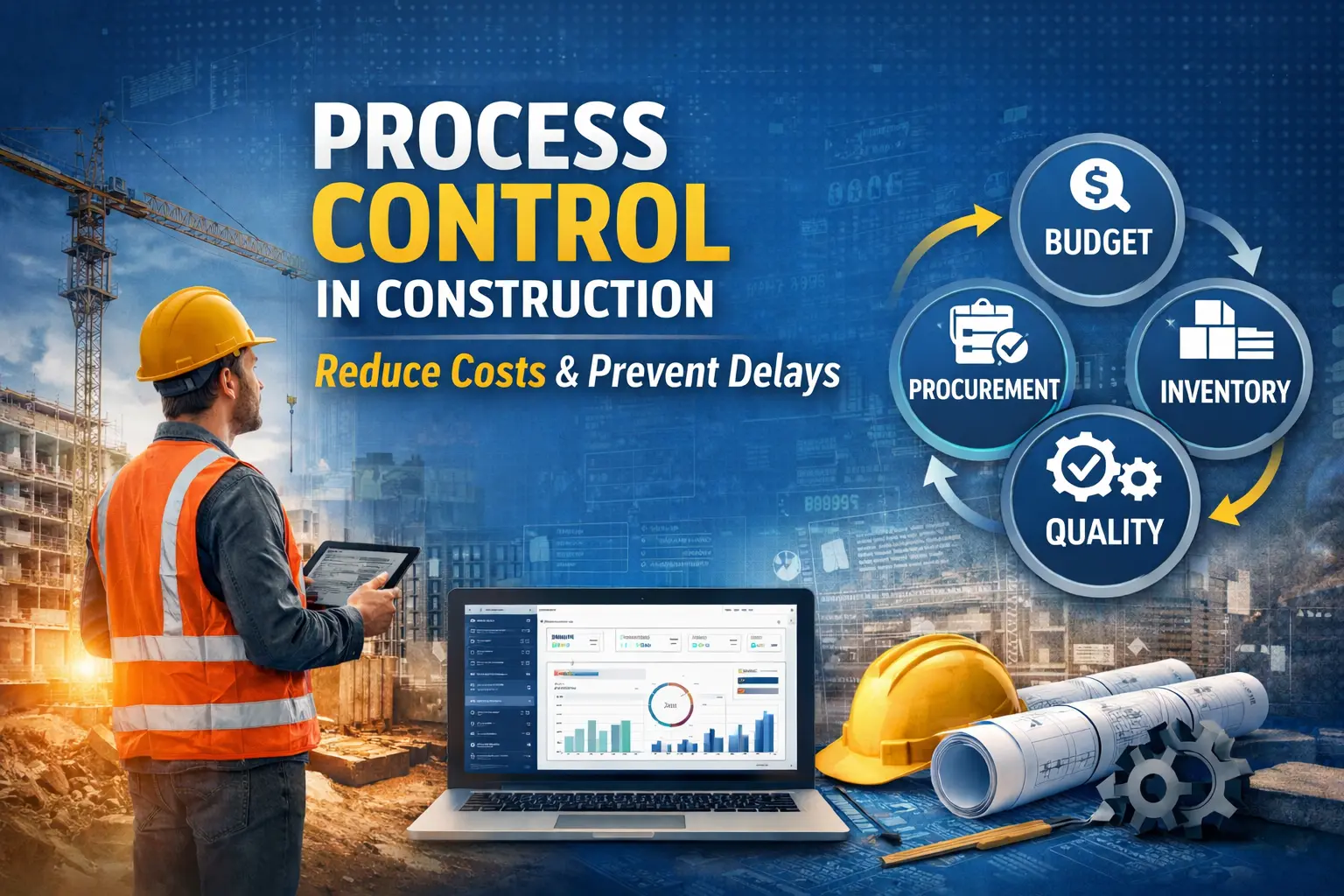
Process Control in Construction: How to Stop Cost Overruns and Project Delays
11 May 2016
Post 02
Top 10 Construction Management Software in India 2026: Which Construction Project Management System Is Right for You?
30 Apr 2026
Post 03
Labour Management System Software for Construction | biCanvas
30 Apr 2026