


 +91-85304 14111




OUR BLOGS
Our Latest Blogs

08 Dec 2025
By Mansi Jha l Ready Mix Concrete
Ready Mix Concrete Explained: Types, Benefits & Why Modern RMC Plants Need ERP
If you've ever driven past a construction site and seen those big rotating concrete trucks, you've witnessed ready mix concrete in action. But there's a lot more to this essential building material than meets the eye.
As we wrap up 2025 and head into 2026, ready mix concrete has become the go-to choice for everything from home driveways to massive infrastructure projects. The global market is now valued at over $1 trillion, and for good reason – it saves time, cuts costs, and delivers consistent quality that traditional on-site mixing simply can't match.
Whether you're a homeowner planning a new patio, a contractor managing multiple projects, or just curious about how modern construction works, this guide will walk you through everything you need to know about ready mix concrete.
So, What Exactly Is Ready Mix Concrete?
Think of ready mix concrete like ordering a custom coffee from your favorite café. Instead of buying beans, milk, and syrup separately and mixing them yourself, you get exactly what you ordered, prepared by professionals, delivered fresh to your door.
Ready mix concrete works the same way. It's a precisely engineered mixture of cement, sand, gravel, water, and special additives that's batched at a specialized plant according to your exact specifications. Then it arrives at your construction site ready to pour – no mixing equipment needed, no guesswork, and no hassle.
The beauty of this system? Every batch comes out exactly the same. When you're building something that needs to last decades, that consistency matters.
What Goes Into Ready Mix Concrete?
Let's break down what's actually in that rotating drum:
Cement – The Glue That Holds Everything Together
Cement is the binding agent, making up about 10-15% of your concrete mix. When water hits cement, a chemical reaction called hydration begins, turning that pourable liquid into rock-solid material.
These days, many suppliers (including biCanvas) are using Type 1L Portland Limestone Cement, which cuts CO2 emissions by about 10% without sacrificing strength. It's a win-win.
Aggregates – The Bulk of Your Mix
Aggregates are basically rocks and sand that make up 60-75% of the concrete:
Coarse aggregates (crushed stone, gravel, granite) give concrete its strength and make up 40-45% of the mix. Think of these as the skeleton.
Fine aggregates (sand) fill in the gaps between the larger stones, accounting for 25-30% of the mix. This is what gives concrete its smooth finish.
There's growing interest in recycled aggregates too. European standards updated in 2025 now allow up to 35% recycled content, and the results have been impressive.
Water – The Activator
Water doesn't just make concrete pourable – it triggers the chemical reaction that makes it harden. The water-to-cement ratio is critical. Too much water, and your concrete becomes weak and porous. Too little, and it's difficult to work with.
Admixtures – The Secret Ingredients
These are the special additives that give concrete superpowers:
- Accelerators speed things up in cold weather
- Retarders slow setting time when it's hot
- Water reducers make concrete easier to work with
- Air-entraining agents help concrete survive freeze-thaw cycles
Some modern mixes also include fly ash or slag, which reduce the amount of cement needed while actually improving performance in many cases.
Types of Ready Mix Concrete: Which One Do You Need?
Not all ready mix concrete is created equal. Here's how to choose the right type for your project:
Transit Mixed Concrete (The Most Popular Choice)
This is what most people picture when they think of ready mix. All the ingredients go into the truck, and the drum keeps rotating during transit, mixing everything together on the way to your site.
Why it's popular: Flexible delivery times, fresh concrete guaranteed, works for most projects, and it's cost-effective. In fact, transit mixed concrete dominates with nearly half the market share.
Best for: Residential driveways, foundations, patios, small to medium commercial projects.
Central Mixed Concrete (The Quality King)
With this method, everything gets mixed at the plant before loading. You get maximum quality control, but there's a shorter delivery window.
Why choose it: When quality is non-negotiable – think high-rise buildings or infrastructure projects where consistency across hundreds of loads is critical.
Best for: Large commercial buildings, bridges, infrastructure projects with strict specifications.
Shrink Mixed Concrete (The Hybrid)
This combines both approaches – partial mixing at the plant (about 70%), then final mixing during transport. It's like getting the best of both worlds.
Why it works: Trucks can carry more concrete, delivery logistics are easier, and you still get good quality control.
Best for: Projects needing large volumes with moderate delivery distances.
The Green Revolution: Sustainable Concrete Is Here
Here's something that might surprise you: the concrete industry historically accounts for about 7-8% of global CO2 emissions. That's huge. But the good news? Things are changing fast.
What's Happening Now
Companies like biCanvas are leading the charge toward carbon-neutral concrete through several approaches:
Supplementary Cementitious Materials (SCMs) are replacing traditional cement with industrial byproducts like fly ash and slag. These materials often make concrete stronger while dramatically cutting carbon emissions.
Carbon capture technology is now injecting captured CO2 directly into concrete mixes, where it mineralizes and actually strengthens the material. You're literally building with captured carbon.
Alternative production methods are emerging. Some companies are now producing cement using electrochemical processes that operate at room temperature with zero direct carbon emissions. Pilot plants are coming online in 2026.
Why This Matters for Your Project
Green building certifications like LEED are increasingly weighing embodied carbon in their scoring. Government projects are starting to require low-carbon options. Even if you're not chasing certifications, choosing lower-carbon concrete shows environmental responsibility without compromising quality.
Where Is Ready Mix Concrete Used?
The short answer? Everywhere. But let's get specific:
Your Home and Neighborhood (38% of the Market)
Ready mix concrete shows up in residential construction more than anywhere else:
- Home foundations that last generations
- Driveways that handle daily traffic
- Patios for outdoor entertainment
- Garage floors
- Sidewalks
- Swimming pools (with special waterproof mixes)
Government housing initiatives worldwide are driving massive residential demand, especially in emerging markets.
Commercial Buildings
Walk into any modern office building, shopping mall, or hotel, and you're walking on ready mix concrete. It's the foundation (literally) of:
- Corporate campuses
- Retail centers
- Multi-story parking structures
- Entertainment venues
- Industrial warehouses
Infrastructure (The Biggest Slice)
This is where ready mix concrete really shines:
- Highways and bridges that connect our cities
- Airport runways handling millions of passengers
- Tunnels cutting through mountains
- Dams managing water resources
- High-speed rail networks
- Port facilities
The U.S. Infrastructure Investment and Jobs Act alone dedicates $62 billion annually to highways and bridges. Similar mega-projects around the world – like Saudi Arabia's NEOM city or India's massive infrastructure pipeline – ensure steady demand for years to come.
Why Ready Mix Concrete Beats Traditional Methods
You Get Consistent Quality, Every Single Time
Plant-controlled batching means computer precision. No more "eyeballing" proportions or dealing with variations between batches. Every cubic yard meets exact specifications.
It Saves You Serious Time
No setting up mixing equipment. No waiting around for batches. Concrete arrives ready to pour, and your crew can focus on placement and finishing instead of mixing.
The Real Cost Savings Add Up
Yes, ready mix costs more per cubic yard than buying raw materials. But look at the big picture:
- No mixing equipment to buy or maintain
- Fewer workers needed
- Projects finish faster
- Minimal wasted material
- Less storage space required
When you add it all up, ready mix usually comes out ahead.
Your Job Site Stays Cleaner and Safer
No dust clouds from cement bags. No piles of sand and gravel. No mixing equipment taking up space. Urban projects especially benefit from this cleaner approach.
Better for the Environment
Centralized batching plants can implement water recycling, emission controls, and sustainable material sourcing in ways that scattered on-site mixing operations simply can't match.
Less Waste Means Lower Costs
Precise batching eliminates the "leftover concrete" problem. Studies show ready mix reduces material waste by up to 10% compared to traditional methods.
Get Exactly What Your Project Needs
Need high-strength concrete for structural columns? Self-consolidating concrete for complex forms? Fiber-reinforced concrete for industrial floors? Ready mix suppliers offer specialized formulations you'd struggle to replicate on-site.
What Are the Downsides? (Let's Be Honest)
No solution is perfect. Here's what you need to consider:
Distance Limitations
Concrete starts setting as soon as mixing begins. Most suppliers can only deliver within 90-120 minutes of the plant. Remote construction sites might need alternative solutions or mobile batching units.
Weather Can Complicate Things
Hot weather makes concrete set faster, requiring special retarding admixtures and careful timing.
Cold weather slows setting and risks freezing damage, necessitating accelerators and protective measures.
Rain can throw off the water-cement ratio and ruin surface finishes.
Good planning and communication with your supplier helps manage these challenges.
It Looks More Expensive (But Usually Isn't)
That delivered price per cubic yard looks higher than raw material costs. But remember – you're avoiding labor costs, equipment expenses, and material waste. The total project cost usually favors ready mix.
Timing Must Be Spot-On
Your site needs to be completely ready when that truck arrives. Delays mean wasted concrete, extra delivery fees, or quality problems if concrete sits too long.
Minimum Order Requirements
Many suppliers set minimum quantities (often 1-2 cubic yards). This can make very small projects or touch-up work less economical.
What's Shaping the Industry Right Now
Technology Is Transforming Everything
AI-powered dispatch systems now optimize delivery routes using real-time traffic data, weather forecasts, and plant loading schedules. IoT sensors monitor concrete quality during mixing and transit. Building Information Modeling (BIM) enables precise material planning.
Early adopters of these technologies are cutting waste, improving efficiency, and delivering better customer experiences.
Regulations Are Getting Stricter
Governments worldwide are implementing tighter environmental standards:
- Carbon emission limits on construction materials
- Mandatory sustainability reporting for major projects
- Embodied carbon requirements for public contracts
- Europe's Carbon Border Adjustment Mechanism (starting 2027) will apply the same CO2 rules to imported cement
Suppliers offering compliant, low-carbon options are positioning themselves as industry leaders.
Cities Keep Growing
With two-thirds of the world projected to live in cities by 2050, demand for housing, infrastructure, and commercial space continues accelerating. Asia-Pacific leads this growth, particularly in India, Indonesia, Vietnam, and China.
Industry Consolidation Continues
Major players like Holcim, CRH, Heidelberg Materials, and CEMEX are expanding through strategic acquisitions. This consolidation creates scale economies and improves service coverage.
Competition from Precast Construction
Precast panels and modular systems are capturing market share in parking structures, warehouses, and standardized buildings. Ready mix suppliers are responding with rapid-set formulations and value-added services.
Supply Chain Challenges
Recent tariff policies have created ripples. The March 2025 implementation of 25% tariffs on cement imports from Canada and Mexico affected about 27% of U.S. cement supply. Additional tariffs on steel and other materials compound these pressures.
The industry continues adapting through diversified supply chains and operational efficiencies.
Best Practices: Getting the Most from Ready Mix Concrete
Before the Truck Arrives
Prepare your site completely:
- Level and compact the subgrade
- Build and brace all formwork
- Position all reinforcement (rebar, wire mesh)
- Clear access routes for trucks
- Brief your crew on the placement plan
- Have all tools and equipment ready
Nothing's worse than a concrete truck waiting while you scramble to finish prep work.
When Ordering
Communicate clearly with your supplier:
- Specify the exact concrete grade (M20, M25, M30, etc.)
- Calculate volume carefully (add 5-10% contingency)
- Confirm delivery time and site access
- Discuss any special requirements (pumping, extended set time)
- Ask about sustainability options
- Understand minimum orders and pricing
A five-minute conversation can prevent expensive problems.
During Placement
Work efficiently once concrete arrives:
- Begin pouring immediately
- Discharge concrete within 90 minutes of batching
- Never add water on-site (it ruins concrete strength)
- Place concrete continuously without long breaks
- Consolidate properly using vibrators
- Coordinate multiple truck arrivals for large pours
After Pouring
Proper curing makes or breaks your project:
- Keep concrete moist for at least 7 days
- Protect from extreme temperatures
- Use curing compounds, wet coverings, or spray systems
- Don't allow traffic or loads until concrete gains strength
- Follow recommended timeframes for your specific mix
Documentation
Keep records of everything:
- Delivery tickets with complete mix specifications
- Slump test results
- Temperature readings
- Concrete cylinders for strength testing (typically at 7 and 28 days)
- Placement dates and weather conditions
- Any issues or modifications made on-site
These records prove invaluable if questions arise later.
Your Questions Answered
1. How long does ready mix concrete last before it needs to be poured?
You've got 90-120 minutes from when mixing starts. In hot weather, that window shrinks to 60-90 minutes. Cold weather might give you slightly more time, but don't push it. Once concrete starts setting, there's no going back.
That's why timing and site preparation are so critical. When that truck shows up, you need to be ready to roll.
2. What does ready mix concrete cost?
In the U.S., expect to pay $120-$150 per cubic yard for standard residential-grade concrete. Specialty mixes (high-strength, rapid-set, low-carbon) cost more.
Several factors affect pricing:
- How far you are from the plant (transportation costs)
- Order size (bulk orders get better rates)
- Mix complexity and special additives
- Local material costs
- Market conditions
- Sustainability certifications
Always get multiple quotes. The cheapest option isn't always the best value when you factor in quality and reliability.
3. What do those concrete grades mean? (M20, M25, M30)
These numbers tell you how strong the concrete will be after 28 days of curing. The "M" stands for "Mix" and the number is the strength in Megapascals (MPa).
M20 (2,900 PSI): Good for residential foundations, floors, and light-duty applications. This is your basic workhorse mix.
M25 (3,625 PSI): The most common choice for residential and light commercial structures. Used in columns, beams, and load-bearing walls.
M30 (4,350 PSI): Required for commercial buildings, multi-story structures, and heavy-duty applications. Higher cement content means higher strength.
Think of it like choosing wood – pine for light work, oak for furniture, and hardwoods for structural beams.
4. Can I pour concrete in extreme weather?
Yes, but you need to take precautions:
Cold Weather (Below 40°F/5°C):
- Use accelerating admixtures
- Consider heated water in the mix
- Protect concrete from freezing for at least 48 hours
- Insulate or heat the curing area
- Extend protection time based on temperature
Hot Weather (Above 85°F/30°C):
- Use retarding admixtures
- Schedule deliveries early morning or evening
- Request chilled water or ice in the mix
- Work fast
- Start curing immediately
- Use fog spraying or wind barriers
Your ready mix supplier can adjust the mix for weather conditions. Just communicate your situation when ordering.
5. How do I calculate how much concrete I need?
Here are the formulas for common projects:
For Slabs (driveways, patios, floors): Length (feet) × Width (feet) × Thickness (inches) ÷ 324 = Cubic yards needed
Example: A 10ft × 12ft patio that's 4 inches thick: 10 × 12 × 4 ÷ 324 = 1.48 cubic yards
For Footings: Length (feet) × Width (feet) × Depth (feet) ÷ 27 = Cubic yards needed
For Round Columns: 3.14 × Radius² (feet) × Height (feet) ÷ 27 = Cubic yards needed
Pro tip: Always order 5-10% extra. Uneven ground, spillage, and over-excavation happen on every job.
Most ready mix suppliers have online calculators on their websites. biCanvas offers free volume calculations to help you order exactly what you need.
6. What's the difference between PSI and MPa?
Same thing, different measurement systems.
PSI (pounds per square inch) is used in the United States. MPa (Megapascals) is the international metric standard.
Quick conversion: 1 MPa = 145 PSI
Common equivalents:
- M20 = 2,900 PSI
- M25 = 3,625 PSI
- M30 = 4,350 PSI
- 3,000 PSI = 20.7 MPa
- 4,000 PSI = 27.6 MPa
Always confirm which system your specifications use. Mixing them up causes expensive mistakes.
7. Is ready mix concrete actually sustainable?
The industry has made huge strides, and progress continues accelerating. Here's the current picture:
What's improving:
- Up to 10% less material waste than on-site mixing
- Centralized production enables water recycling and emission controls
- Increasing use of supplementary materials reduces cement content
- Carbon capture technologies are being deployed
- Recycled aggregate content is expanding
- Enhanced durability means structures last longer
Ongoing challenges:
- Cement production remains energy-intensive (though improving rapidly)
- Transportation generates emissions (being optimized through AI routing)
- Aggregate extraction has environmental impacts (being addressed through recycling)
The concrete industry has committed to net-zero by 2050, and innovation is happening faster than most people realize. When choosing a supplier, ask about their sustainability initiatives and certifications.
At biCanvas , we're investing heavily in low-carbon concrete options and transparent environmental reporting.
8. What causes concrete to fail, and how do I prevent it?
Common problems and solutions:
Cracking:
- Causes: Too much water, rapid drying, missing control joints
- Prevention: Proper mix design, adequate curing, planned control joints, appropriate reinforcement
Surface scaling:
- Causes: Freeze-thaw cycles, deicing salts, poor finishing
- Prevention: Air-entrained concrete in cold climates, proper curing, sealed surfaces
Honeycombing (surface voids):
- Causes: Inadequate consolidation, form leakage
- Prevention: Proper vibration, tight formwork, correct slump
Segregation:
- Causes: Too much slump, improper handling
- Prevention: Correct water-cement ratio, careful placement
Discoloration:
- Causes: Inconsistent water content, uneven curing
- Prevention: Consistent mixing, uniform curing, clean formwork
Most concrete problems trace back to improper placement or curing rather than the concrete itself.
9. When can I walk or drive on new concrete?
Be patient. Concrete gains strength gradually.
Foot traffic: Wait 24-48 hours. The surface should be firm to light pressure.
Light vehicles: Minimum 7 days, ideally 10-14 days for residential driveways.
Heavy loads: Wait the full 28 days for complete strength development before heavy vehicles or structural loads.
These timelines assume normal curing conditions. Hot weather may allow earlier access; cold weather requires longer waiting.
If you need faster turnaround, ask about rapid-strength mixes. Some specialty formulations can handle light traffic in 24-36 hours.
10. Can I add water if the concrete seems too thick?
Absolutely not. Never, ever add water on-site.
Every gallon of water added per cubic yard can reduce strength by 200-500 PSI. It increases permeability, shortens lifespan, and compromises every specification the mix was designed to meet.
If workability seems wrong:
- Call the batch plant immediately
- Request water-reducing admixtures
- Verify you ordered the correct slump for your placement method
- Consider alternative placement techniques (pumping, chutes)
- Reject loads that don't meet specifications
If you're consistently having workability issues, discuss your placement method with your supplier when ordering. They can adjust the mix design appropriately.
Looking Ahead: The Future of Ready Mix Concrete
As we step into 2026, ready mix concrete sits at an exciting crossroads. The industry's push toward sustainability, combined with rapid digital innovation, positions ready mix as the construction material of choice for the next wave of urban development and infrastructure investment.
The convergence of green concrete technologies, AI-powered operations, and massive infrastructure commitments creates real opportunities. Whether you're building a backyard patio or managing large-scale infrastructure, the ready mix industry is better equipped than ever to deliver quality, efficiency, and environmental responsibility.
Streamline Your Operations with biCanvas ERP
Managing a ready mix concrete business comes with unique challenges – from precise mix design management and real-time inventory tracking to delivery coordination and quality control. That's where modern ready mix concrete ERP software makes all the difference.
biCanvas ERP is specifically designed for the ready mix concrete industry, bringing your entire operation under one intelligent platform. Here's how it transforms your business:
Complete Operational Control
Running a ready mix concrete business means juggling dozens of moving parts simultaneously. biCanvas ERP brings everything together so you can actually see what's happening across your operation.
Take mix design management, for example. Instead of flipping through binders or hunting for that spreadsheet, you've got every recipe stored digitally. The system calculates material requirements automatically and connects directly to your batching plant. One customer recently told us they eliminated nearly all their mix design errors after switching to biCanvas ERP.
Inventory becomes much simpler too. The software tracks your cement, aggregates, and admixtures in real time. When stocks run low, you get alerts before you're in trouble. No more emergency calls to suppliers or having to turn away orders because you ran short on materials.
The dispatch and logistics features really shine during busy periods. You can see where every truck is on GPS, figure out the most efficient routes, and keep customers updated with accurate arrival times. One of our clients reduced their fuel costs by nearly 30% just by optimizing routes through the system.
Quality control gets easier when everything's documented automatically. Every batch, every test result, every cube strength measurement – it's all tracked and stored. When inspectors show up or customers ask questions, you've got the data ready to go. Plus, having this documentation builds trust and often helps you win bigger contracts.
The financial side connects directly with production. You can see actual costs and profit margins on each order, not just rough estimates. Billing happens faster, invoices are more accurate, and cash flow improves because you're not chasing down missing information.
Why biCanvas ERP Works for Concrete Businesses
Here's the thing about most business software – it's built for generic manufacturing or retail. biCanvas ERP is different because it's designed specifically for the concrete industry. We understand dump and divert scenarios, mobile batching plants, and all those unique workflows that make your business different from everyone else's.
The cloud-based setup means you're not tied to your desk. Check on operations from the plant, review orders from a job site, or approve deliveries from home. Your business keeps moving even when you're not physically there.
As you grow, the system grows with you. Adding a second plant? No problem. Expanding into a new region? The software handles it. You won't outgrow biCanvas ERP as your business evolves.
We've also made sure it plays nice with the equipment you already have. The software connects with batching controllers, GPS systems, weighbridges, and lab equipment. This means less manual data entry, which means fewer mistakes and faster operations.
Since we're based in India, we understand the local business environment and regulatory landscape. When you need help, you're not dealing with a call center halfway around the world. Our team knows your market and speaks your language.
What You Can Expect to See
The numbers tell a compelling story. Ready mix businesses using biCanvas ERP typically cut material waste by 15-20% through more precise batching. Fleet utilization improves by 25-30% when routes are optimized properly. Order processing and billing cycles get 40-50% faster because information flows automatically instead of being manually transferred between systems.
Beyond the statistics, there's the less tangible stuff that matters just as much. Manual errors drop dramatically. Your team spends less time on redundant data entry and more time on work that actually grows the business. Decision-making improves because you have real-time analytics instead of relying on gut feel or outdated reports.
At biCanvas , we believe that informed customers make better decisions. We're committed to staying at the forefront of concrete innovation – from sustainable mix designs and digital ordering systems to comprehensive ready mix concrete ERP solutions that power your entire operation.
Understanding ready mix concrete isn't just about knowing what goes into the mix. It's about recognizing how this material shapes our built environment and leveraging modern technology to deliver it efficiently, profitably, and sustainably.
Ready to Get Started?
biCanvas serves two distinct groups, and we're here to help both.
If you're working on a construction project and need concrete delivered, we've got you covered. Our team knows concrete inside and out. We'll walk you through choosing the right mix for your specific application, help you calculate volumes accurately, coordinate delivery timing, and make sure everything goes smoothly from order to pour. Decades of experience backing up every delivery truck.
If you're running a ready mix concrete business and struggling with operational complexity, let's talk about biCanvas ERP. Book a demo and we'll show you exactly how the software handles your daily challenges – from production planning to final invoicing. See it working with real scenarios from your business, not generic examples that don't quite fit.
Get in touch with biCanvas today. Whether you need concrete delivered or software to run your concrete business more efficiently, we're here to help you succeed.
About biCanvas
biCanvas delivers ready mix concrete solutions for construction projects throughout the region. With modern batching plants, a comprehensive range of concrete mixes, and a focus on sustainable practices, we serve residential, commercial, and infrastructure customers with equal dedication.
Our experienced team stays current with industry innovations to provide cutting-edge solutions that meet evolving construction demands. From standard mixes to specialized formulations, from small residential pours to large commercial projects, biCanvas brings quality and reliability to every delivery.
OUR BLOGS
Our Latest Blogs
08 Dec 2025
By Mansi Jha Ready Mix Concrete
Ready Mix Concrete Explained: Types, Benefits & Why Modern RMC Plants Need ERP
If you've ever driven past a construction site and seen those big rotating concrete trucks, you've witnessed ready mix concrete in action. But there's a lot more to this essential building material than meets the eye. As we wrap up 2025 and head into 2026, ready mix concrete has become the go-to choice for everything from home driveways to massive infrastructure projects. The global market is now valued at over $1 trillion, and for good reason – it saves time, cuts costs, and delivers consistent quality that traditional on-site mixing simply can't match. Whether you're a homeowner planning a new patio, a contractor managing multiple projects, or just curious about how modern construction works, this guide will walk you through everything you need to know about ready mix concrete. So, What Exactly Is Ready Mix Concrete? Think of ready mix concrete like ordering a custom coffee from your favorite café. Instead of buying beans, milk, and syrup separately and mixing them yourself, you get exactly what you ordered, prepared by professionals, delivered fresh to your door. Ready mix concrete works the same way. It's a precisely engineered mixture of cement, sand, gravel, water, and special additives that's batched at a specialized plant according to your exact specifications. Then it arrives at your construction site ready to pour – no mixing equipment needed, no guesswork, and no hassle. The beauty of this system? Every batch comes out exactly the same. When you're building something that needs to last decades, that consistency matters. What Goes Into Ready Mix Concrete? Let's break down what's actually in that rotating drum: Cement – The Glue That Holds Everything Together Cement is the binding agent, making up about 10-15% of your concrete mix. When water hits cement, a chemical reaction called hydration begins, turning that pourable liquid into rock-solid material. These days, many suppliers (including biCanvas) are using Type 1L Portland Limestone Cement, which cuts CO2 emissions by about 10% without sacrificing strength. It's a win-win. Aggregates – The Bulk of Your Mix Aggregates are basically rocks and sand that make up 60-75% of the concrete: Coarse aggregates (crushed stone, gravel, granite) give concrete its strength and make up 40-45% of the mix. Think of these as the skeleton. Fine aggregates (sand) fill in the gaps between the larger stones, accounting for 25-30% of the mix. This is what gives concrete its smooth finish. There's growing interest in recycled aggregates too. European standards updated in 2025 now allow up to 35% recycled content, and the results have been impressive. Water – The Activator Water doesn't just make concrete pourable – it triggers the chemical reaction that makes it harden. The water-to-cement ratio is critical. Too much water, and your concrete becomes weak and porous. Too little, and it's difficult to work with. Admixtures – The Secret Ingredients These are the special additives that give concrete superpowers: Accelerators speed things up in cold weather Retarders slow setting time when it's hot Water reducers make concrete easier to work with Air-entraining agents help concrete survive freeze-thaw cycles Some modern mixes also include fly ash or slag, which reduce the amount of cement needed while actually improving performance in many cases. Types of Ready Mix Concrete: Which One Do You Need? Not all ready mix concrete is created equal. Here's how to choose the right type for your project: Transit Mixed Concrete (The Most Popular Choice) This is what most people picture when they think of ready mix. All the ingredients go into the truck, and the drum keeps rotating during transit, mixing everything together on the way to your site. Why it's popular: Flexible delivery times, fresh concrete guaranteed, works for most projects, and it's cost-effective. In fact, transit mixed concrete dominates with nearly half the market share. Best for: Residential driveways, foundations, patios, small to medium commercial projects. Central Mixed Concrete (The Quality King) With this method, everything gets mixed at the plant before loading. You get maximum quality control, but there's a shorter delivery window. Why choose it: When quality is non-negotiable – think high-rise buildings or infrastructure projects where consistency across hundreds of loads is critical. Best for: Large commercial buildings, bridges, infrastructure projects with strict specifications. Shrink Mixed Concrete (The Hybrid) This combines both approaches – partial mixing at the plant (about 70%), then final mixing during transport. It's like getting the best of both worlds. Why it works: Trucks can carry more concrete, delivery logistics are easier, and you still get good quality control. Best for: Projects needing large volumes with moderate delivery distances. The Green Revolution: Sustainable Concrete Is Here Here's something that might surprise you: the concrete industry historically accounts for about 7-8% of global CO2 emissions. That's huge. But the good news? Things are changing fast. What's Happening Now Companies like biCanvas are leading the charge toward carbon-neutral concrete through several approaches: Supplementary Cementitious Materials (SCMs) are replacing traditional cement with industrial byproducts like fly ash and slag. These materials often make concrete stronger while dramatically cutting carbon emissions. Carbon capture technology is now injecting captured CO2 directly into concrete mixes, where it mineralizes and actually strengthens the material. You're literally building with captured carbon. Alternative production methods are emerging. Some companies are now producing cement using electrochemical processes that operate at room temperature with zero direct carbon emissions. Pilot plants are coming online in 2026. Why This Matters for Your Project Green building certifications like LEED are increasingly weighing embodied carbon in their scoring. Government projects are starting to require low-carbon options. Even if you're not chasing certifications, choosing lower-carbon concrete shows environmental responsibility without compromising quality. Where Is Ready Mix Concrete Used? The short answer? Everywhere. But let's get specific: Your Home and Neighborhood (38% of the Market) Ready mix concrete shows up in residential construction more than anywhere else: Home foundations that last generations Driveways that handle daily traffic Patios for outdoor entertainment Garage floors Sidewalks Swimming pools (with special waterproof mixes) Government housing initiatives worldwide are driving massive residential demand, especially in emerging markets. Commercial Buildings Walk into any modern office building, shopping mall, or hotel, and you're walking on ready mix concrete. It's the foundation (literally) of: Corporate campuses Retail centers Multi-story parking structures Entertainment venues Industrial warehouses Infrastructure (The Biggest Slice) This is where ready mix concrete really shines: Highways and bridges that connect our cities Airport runways handling millions of passengers Tunnels cutting through mountains Dams managing water resources High-speed rail networks Port facilities The U.S. Infrastructure Investment and Jobs Act alone dedicates $62 billion annually to highways and bridges. Similar mega-projects around the world – like Saudi Arabia's NEOM city or India's massive infrastructure pipeline – ensure steady demand for years to come. Why Ready Mix Concrete Beats Traditional Methods You Get Consistent Quality, Every Single Time Plant-controlled batching means computer precision. No more "eyeballing" proportions or dealing with variations between batches. Every cubic yard meets exact specifications. It Saves You Serious Time No setting up mixing equipment. No waiting around for batches. Concrete arrives ready to pour, and your crew can focus on placement and finishing instead of mixing. The Real Cost Savings Add Up Yes, ready mix costs more per cubic yard than buying raw materials. But look at the big picture: No mixing equipment to buy or maintain Fewer workers needed Projects finish faster Minimal wasted material Less storage space required When you add it all up, ready mix usually comes out ahead. Your Job Site Stays Cleaner and Safer No dust clouds from cement bags. No piles of sand and gravel. No mixing equipment taking up space. Urban projects especially benefit from this cleaner approach. Better for the Environment Centralized batching plants can implement water recycling, emission controls, and sustainable material sourcing in ways that scattered on-site mixing operations simply can't match. Less Waste Means Lower Costs Precise batching eliminates the "leftover concrete" problem. Studies show ready mix reduces material waste by up to 10% compared to traditional methods. Get Exactly What Your Project Needs Need high-strength concrete for structural columns? Self-consolidating concrete for complex forms? Fiber-reinforced concrete for industrial floors? Ready mix suppliers offer specialized formulations you'd struggle to replicate on-site. What Are the Downsides? (Let's Be Honest) No solution is perfect. Here's what you need to consider: Distance Limitations Concrete starts setting as soon as mixing begins. Most suppliers can only deliver within 90-120 minutes of the plant. Remote construction sites might need alternative solutions or mobile batching units. Weather Can Complicate Things Hot weather makes concrete set faster, requiring special retarding admixtures and careful timing. Cold weather slows setting and risks freezing damage, necessitating accelerators and protective measures. Rain can throw off the water-cement ratio and ruin surface finishes. Good planning and communication with your supplier helps manage these challenges. It Looks More Expensive (But Usually Isn't) That delivered price per cubic yard looks higher than raw material costs. But remember – you're avoiding labor costs, equipment expenses, and material waste. The total project cost usually favors ready mix. Timing Must Be Spot-On Your site needs to be completely ready when that truck arrives. Delays mean wasted concrete, extra delivery fees, or quality problems if concrete sits too long. Minimum Order Requirements Many suppliers set minimum quantities (often 1-2 cubic yards). This can make very small projects or touch-up work less economical. What's Shaping the Industry Right Now Technology Is Transforming Everything AI-powered dispatch systems now optimize delivery routes using real-time traffic data, weather forecasts, and plant loading schedules. IoT sensors monitor concrete quality during mixing and transit. Building Information Modeling (BIM) enables precise material planning. Early adopters of these technologies are cutting waste, improving efficiency, and delivering better customer experiences. Regulations Are Getting Stricter Governments worldwide are implementing tighter environmental standards: Carbon emission limits on construction materials Mandatory sustainability reporting for major projects Embodied carbon requirements for public contracts Europe's Carbon Border Adjustment Mechanism (starting 2027) will apply the same CO2 rules to imported cement Suppliers offering compliant, low-carbon options are positioning themselves as industry leaders. Cities Keep Growing With two-thirds of the world projected to live in cities by 2050, demand for housing, infrastructure, and commercial space continues accelerating. Asia-Pacific leads this growth, particularly in India, Indonesia, Vietnam, and China. Industry Consolidation Continues Major players like Holcim, CRH, Heidelberg Materials, and CEMEX are expanding through strategic acquisitions. This consolidation creates scale economies and improves service coverage. Competition from Precast Construction Precast panels and modular systems are capturing market share in parking structures, warehouses, and standardized buildings. Ready mix suppliers are responding with rapid-set formulations and value-added services. Supply Chain Challenges Recent tariff policies have created ripples. The March 2025 implementation of 25% tariffs on cement imports from Canada and Mexico affected about 27% of U.S. cement supply. Additional tariffs on steel and other materials compound these pressures. The industry continues adapting through diversified supply chains and operational efficiencies. Best Practices: Getting the Most from Ready Mix Concrete Before the Truck Arrives Prepare your site completely: Level and compact the subgrade Build and brace all formwork Position all reinforcement (rebar, wire mesh) Clear access routes for trucks Brief your crew on the placement plan Have all tools and equipment ready Nothing's worse than a concrete truck waiting while you scramble to finish prep work. When Ordering Communicate clearly with your supplier: Specify the exact concrete grade (M20, M25, M30, etc.) Calculate volume carefully (add 5-10% contingency) Confirm delivery time and site access Discuss any special requirements (pumping, extended set time) Ask about sustainability options Understand minimum orders and pricing A five-minute conversation can prevent expensive problems. During Placement Work efficiently once concrete arrives: Begin pouring immediately Discharge concrete within 90 minutes of batching Never add water on-site (it ruins concrete strength) Place concrete continuously without long breaks Consolidate properly using vibrators Coordinate multiple truck arrivals for large pours After Pouring Proper curing makes or breaks your project: Keep concrete moist for at least 7 days Protect from extreme temperatures Use curing compounds, wet coverings, or spray systems Don't allow traffic or loads until concrete gains strength Follow recommended timeframes for your specific mix Documentation Keep records of everything: Delivery tickets with complete mix specifications Slump test results Temperature readings Concrete cylinders for strength testing (typically at 7 and 28 days) Placement dates and weather conditions Any issues or modifications made on-site These records prove invaluable if questions arise later. Your Questions Answered 1. How long does ready mix concrete last before it needs to be poured? You've got 90-120 minutes from when mixing starts. In hot weather, that window shrinks to 60-90 minutes. Cold weather might give you slightly more time, but don't push it. Once concrete starts setting, there's no going back. That's why timing and site preparation are so critical. When that truck shows up, you need to be ready to roll. 2. What does ready mix concrete cost? In the U.S., expect to pay $120-$150 per cubic yard for standard residential-grade concrete. Specialty mixes (high-strength, rapid-set, low-carbon) cost more. Several factors affect pricing: How far you are from the plant (transportation costs) Order size (bulk orders get better rates) Mix complexity and special additives Local material costs Market conditions Sustainability certifications Always get multiple quotes. The cheapest option isn't always the best value when you factor in quality and reliability. 3. What do those concrete grades mean? (M20, M25, M30) These numbers tell you how strong the concrete will be after 28 days of curing. The "M" stands for "Mix" and the number is the strength in Megapascals (MPa). M20 (2,900 PSI): Good for residential foundations, floors, and light-duty applications. This is your basic workhorse mix. M25 (3,625 PSI): The most common choice for residential and light commercial structures. Used in columns, beams, and load-bearing walls. M30 (4,350 PSI): Required for commercial buildings, multi-story structures, and heavy-duty applications. Higher cement content means higher strength. Think of it like choosing wood – pine for light work, oak for furniture, and hardwoods for structural beams. 4. Can I pour concrete in extreme weather? Yes, but you need to take precautions: Cold Weather (Below 40°F/5°C): Use accelerating admixtures Consider heated water in the mix Protect concrete from freezing for at least 48 hours Insulate or heat the curing area Extend protection time based on temperature Hot Weather (Above 85°F/30°C): Use retarding admixtures Schedule deliveries early morning or evening Request chilled water or ice in the mix Work fast Start curing immediately Use fog spraying or wind barriers Your ready mix supplier can adjust the mix for weather conditions. Just communicate your situation when ordering. 5. How do I calculate how much concrete I need? Here are the formulas for common projects: For Slabs (driveways, patios, floors): Length (feet) × Width (feet) × Thickness (inches) ÷ 324 = Cubic yards needed Example: A 10ft × 12ft patio that's 4 inches thick: 10 × 12 × 4 ÷ 324 = 1.48 cubic yards For Footings: Length (feet) × Width (feet) × Depth (feet) ÷ 27 = Cubic yards needed For Round Columns: 3.14 × Radius² (feet) × Height (feet) ÷ 27 = Cubic yards needed Pro tip: Always order 5-10% extra. Uneven ground, spillage, and over-excavation happen on every job. Most ready mix suppliers have online calculators on their websites. biCanvas offers free volume calculations to help you order exactly what you need. 6. What's the difference between PSI and MPa? Same thing, different measurement systems. PSI (pounds per square inch) is used in the United States. MPa (Megapascals) is the international metric standard. Quick conversion: 1 MPa = 145 PSI Common equivalents: M20 = 2,900 PSI M25 = 3,625 PSI M30 = 4,350 PSI 3,000 PSI = 20.7 MPa 4,000 PSI = 27.6 MPa Always confirm which system your specifications use. Mixing them up causes expensive mistakes. 7. Is ready mix concrete actually sustainable? The industry has made huge strides, and progress continues accelerating. Here's the current picture: What's improving: Up to 10% less material waste than on-site mixing Centralized production enables water recycling and emission controls Increasing use of supplementary materials reduces cement content Carbon capture technologies are being deployed Recycled aggregate content is expanding Enhanced durability means structures last longer Ongoing challenges: Cement production remains energy-intensive (though improving rapidly) Transportation generates emissions (being optimized through AI routing) Aggregate extraction has environmental impacts (being addressed through recycling) The concrete industry has committed to net-zero by 2050, and innovation is happening faster than most people realize. When choosing a supplier, ask about their sustainability initiatives and certifications. At biCanvas , we're investing heavily in low-carbon concrete options and transparent environmental reporting. 8. What causes concrete to fail, and how do I prevent it? Common problems and solutions: Cracking: Causes: Too much water, rapid drying, missing control joints Prevention: Proper mix design, adequate curing, planned control joints, appropriate reinforcement Surface scaling: Causes: Freeze-thaw cycles, deicing salts, poor finishing Prevention: Air-entrained concrete in cold climates, proper curing, sealed surfaces Honeycombing (surface voids): Causes: Inadequate consolidation, form leakage Prevention: Proper vibration, tight formwork, correct slump Segregation: Causes: Too much slump, improper handling Prevention: Correct water-cement ratio, careful placement Discoloration: Causes: Inconsistent water content, uneven curing Prevention: Consistent mixing, uniform curing, clean formwork Most concrete problems trace back to improper placement or curing rather than the concrete itself. 9. When can I walk or drive on new concrete? Be patient. Concrete gains strength gradually. Foot traffic: Wait 24-48 hours. The surface should be firm to light pressure. Light vehicles: Minimum 7 days, ideally 10-14 days for residential driveways. Heavy loads: Wait the full 28 days for complete strength development before heavy vehicles or structural loads. These timelines assume normal curing conditions. Hot weather may allow earlier access; cold weather requires longer waiting. If you need faster turnaround, ask about rapid-strength mixes. Some specialty formulations can handle light traffic in 24-36 hours. 10. Can I add water if the concrete seems too thick? Absolutely not. Never, ever add water on-site. Every gallon of water added per cubic yard can reduce strength by 200-500 PSI. It increases permeability, shortens lifespan, and compromises every specification the mix was designed to meet. If workability seems wrong: Call the batch plant immediately Request water-reducing admixtures Verify you ordered the correct slump for your placement method Consider alternative placement techniques (pumping, chutes) Reject loads that don't meet specifications If you're consistently having workability issues, discuss your placement method with your supplier when ordering. They can adjust the mix design appropriately. Looking Ahead: The Future of Ready Mix Concrete As we step into 2026, ready mix concrete sits at an exciting crossroads. The industry's push toward sustainability, combined with rapid digital innovation, positions ready mix as the construction material of choice for the next wave of urban development and infrastructure investment. The convergence of green concrete technologies, AI-powered operations, and massive infrastructure commitments creates real opportunities. Whether you're building a backyard patio or managing large-scale infrastructure, the ready mix industry is better equipped than ever to deliver quality, efficiency, and environmental responsibility. Streamline Your Operations with biCanvas ERP Managing a ready mix concrete business comes with unique challenges – from precise mix design management and real-time inventory tracking to delivery coordination and quality control. That's where modern ready mix concrete ERP software makes all the difference. biCanvas ERP is specifically designed for the ready mix concrete industry, bringing your entire operation under one intelligent platform. Here's how it transforms your business: Complete Operational Control Running a ready mix concrete business means juggling dozens of moving parts simultaneously. biCanvas ERP brings everything together so you can actually see what's happening across your operation. Take mix design management, for example. Instead of flipping through binders or hunting for that spreadsheet, you've got every recipe stored digitally. The system calculates material requirements automatically and connects directly to your batching plant. One customer recently told us they eliminated nearly all their mix design errors after switching to biCanvas ERP. Inventory becomes much simpler too. The software tracks your cement, aggregates, and admixtures in real time. When stocks run low, you get alerts before you're in trouble. No more emergency calls to suppliers or having to turn away orders because you ran short on materials. The dispatch and logistics features really shine during busy periods. You can see where every truck is on GPS, figure out the most efficient routes, and keep customers updated with accurate arrival times. One of our clients reduced their fuel costs by nearly 30% just by optimizing routes through the system. Quality control gets easier when everything's documented automatically. Every batch, every test result, every cube strength measurement – it's all tracked and stored. When inspectors show up or customers ask questions, you've got the data ready to go. Plus, having this documentation builds trust and often helps you win bigger contracts. The financial side connects directly with production. You can see actual costs and profit margins on each order, not just rough estimates. Billing happens faster, invoices are more accurate, and cash flow improves because you're not chasing down missing information. Why biCanvas ERP Works for Concrete Businesses Here's the thing about most business software – it's built for generic manufacturing or retail. biCanvas ERP is different because it's designed specifically for the concrete industry. We understand dump and divert scenarios, mobile batching plants, and all those unique workflows that make your business different from everyone else's. The cloud-based setup means you're not tied to your desk. Check on operations from the plant, review orders from a job site, or approve deliveries from home. Your business keeps moving even when you're not physically there. As you grow, the system grows with you. Adding a second plant? No problem. Expanding into a new region? The software handles it. You won't outgrow biCanvas ERP as your business evolves. We've also made sure it plays nice with the equipment you already have. The software connects with batching controllers, GPS systems, weighbridges, and lab equipment. This means less manual data entry, which means fewer mistakes and faster operations. Since we're based in India, we understand the local business environment and regulatory landscape. When you need help, you're not dealing with a call center halfway around the world. Our team knows your market and speaks your language. What You Can Expect to See The numbers tell a compelling story. Ready mix businesses using biCanvas ERP typically cut material waste by 15-20% through more precise batching. Fleet utilization improves by 25-30% when routes are optimized properly. Order processing and billing cycles get 40-50% faster because information flows automatically instead of being manually transferred between systems. Beyond the statistics, there's the less tangible stuff that matters just as much. Manual errors drop dramatically. Your team spends less time on redundant data entry and more time on work that actually grows the business. Decision-making improves because you have real-time analytics instead of relying on gut feel or outdated reports. At biCanvas , we believe that informed customers make better decisions. We're committed to staying at the forefront of concrete innovation – from sustainable mix designs and digital ordering systems to comprehensive ready mix concrete ERP solutions that power your entire operation. Understanding ready mix concrete isn't just about knowing what goes into the mix. It's about recognizing how this material shapes our built environment and leveraging modern technology to deliver it efficiently, profitably, and sustainably. Ready to Get Started? biCanvas serves two distinct groups, and we're here to help both. If you're working on a construction project and need concrete delivered, we've got you covered. Our team knows concrete inside and out. We'll walk you through choosing the right mix for your specific application, help you calculate volumes accurately, coordinate delivery timing, and make sure everything goes smoothly from order to pour. Decades of experience backing up every delivery truck. If you're running a ready mix concrete business and struggling with operational complexity, let's talk about biCanvas ERP. Book a demo and we'll show you exactly how the software handles your daily challenges – from production planning to final invoicing. See it working with real scenarios from your business, not generic examples that don't quite fit. Get in touch with biCanvas today. Whether you need concrete delivered or software to run your concrete business more efficiently, we're here to help you succeed. About biCanvas biCanvas delivers ready mix concrete solutions for construction projects throughout the region. With modern batching plants, a comprehensive range of concrete mixes, and a focus on sustainable practices, we serve residential, commercial, and infrastructure customers with equal dedication. Our experienced team stays current with industry innovations to provide cutting-edge solutions that meet evolving construction demands. From standard mixes to specialized formulations, from small residential pours to large commercial projects, biCanvas brings quality and reliability to every delivery.
OUR BLOGS
Our Latest Blogs
07 Sep 2026
By Mohini Dodwade Infrastructure
Tender Management Software for Contractors: How to Stop Losing Bids to Bad Tracking
A contractor's team spends three weeks preparing a bid. The technical documents are ready, the BOQ is priced, the compliance certificates are attached. Then someone realises the submission portal closed two hours ago because the deadline was tracked in a WhatsApp message that got buried under fifty other chats. The tender is gone, and so is the revenue it would have brought in. This is not a rare story. It is the single most common reason contractors and infrastructure firms lose tenders they were technically capable of winning. The problem is almost never the quality of the bid. It is the absence of a system that tracks every tender, every deadline, and every document in one place. That is exactly the gap tender management software is built to close. What Tender Management Software Actually Does Tender management software centralises everything a contracting or infrastructure firm needs to track, prepare, and submit bids. Instead of tenders living across email threads, spreadsheets, and personal notes, the software gives a firm one place to see every active opportunity, its deadline, its status, and the person responsible for it. At a basic level, tender management software should let a team do the following without switching tools: Log every tender opportunity as soon as it is identified, with client, value, and submission date Track document checklists so nothing is missing at the point of submission Set automated deadline alerts instead of relying on someone remembering Store past tender history so pricing and win rates can be reviewed later For firms running five or six tenders at a time, this can be managed loosely. For firms running twenty or more across multiple regions, manual tracking stops working almost immediately, and that is when tenders start slipping through. Why Contractors Lose Tenders They Should Have Won Most tender losses are not about price or capability. They come down to process failures that have nothing to do with the actual bid quality. The most common one is deadline visibility. When tenders are tracked in individual inboxes rather than a shared system, there is no single view of what is due this week versus next month. A second common failure is incomplete documentation. Tenders often get rejected at the technical evaluation stage simply because a compliance certificate or an experience letter was missing, not because the commercial offer was uncompetitive. A third issue is a complete lack of institutional memory. When the person who handled a similar tender six months ago leaves the company or is on leave, the pricing logic and lessons learned leave with them. Tender management software addresses all three by making the tender pipeline visible to the whole team, not just the person managing it. How Tender Management Connects to the Rest of Your Project Workflow Tender management should never sit as an isolated tool. The moment a tender is won, it needs to flow directly into project setup, without the team re-entering scope, quantities, or pricing from scratch. This is where most standalone tender trackers fall short. They stop at the "won" stage, and everything that follows has to be rebuilt manually. A tender that is priced against a proper construction cost estimation software tool carries that pricing data straight into execution, so the budget the team bid on becomes the budget they actually work against. Similarly, the BOQ built during tender preparation should not need to be recreated once the project starts. When tender management is not connected to procurement and site execution, firms run into the same breakdown that happens when construction operations break between BOQ and MRN, where the numbers used to win the job stop matching the numbers used to run it. This is the real argument for tender management inside an ERP rather than as a separate app. A tender won today should be a project scheduled tomorrow, using the same cost estimation, the same BOQ, and the same document trail, without anyone retyping data. What to Look for in Tender Management Software Not every tender tracker is built for construction and infrastructure firms specifically. Generic project tools miss the parts of tendering that matter most in this industry, like multi-stage government approvals, EMD tracking, and technical-versus-commercial bid separation. When evaluating tender management software, a few things matter more than the rest. The system should support document version control, since tender documents go through multiple revisions before submission. It should allow role-based access, so junior estimators can build pricing without seeing confidential margin data. It should integrate with procurement, so vendor quotes gathered during tendering can be reused instead of collected again later. And it should give visibility into win rates by client, region, or tender type, so leadership can see which tenders are actually worth pursuing. Firms that already use construction inventory management software or a structured construction project scheduling software system will get the most value from tender management that plugs directly into the same platform, since material availability and crew scheduling both affect what a firm can realistically bid on. Getting Tender Management Right Before You Need It The firms that handle tenders well are not the ones with the biggest business development teams. They are the ones with a system that makes deadlines, documents, and pricing visible to everyone involved, long before the submission date becomes an emergency. Tender management software is what makes that possible at scale, and when it is connected to the rest of the project workflow, a won tender turns into a properly budgeted project instead of a fresh administrative headache. biCanvas brings tender management into the same platform as estimating, procurement, and project execution, so nothing gets re-entered and nothing gets missed between winning a bid and starting the job. Explore biCanvas's full Construction ERP Software to see how tendering fits into the bigger picture.
OUR BLOGS
Our Latest Blogs
17 Sep 2026
By Mohini Dodwade Construction
India’s Data Centre Expansion: The Construction Opportunities Behind the Digital Boom
India’s digital economy is creating a new kind of construction demand. Data centres may operate behind the scenes, but the infrastructure required to build them is anything but invisible. From high-capacity power systems and cooling infrastructure to specialised buildings, connectivity and supporting civil works, every new facility creates a complex chain of construction and infrastructure activity. And that pipeline is expanding. India’s installed data-centre power capacity has grown from around 375 MW in 2020 to approximately 1.57 GW as of August 2026, according to the Government of India. The expansion is being driven by growing digital services, cloud adoption, artificial intelligence and high-performance computing. A recent KPMG-linked estimate reported in September 2026 puts the broader infrastructure opportunity created by India’s data-centre sector at around $90 billion by FY35. For India’s construction and infrastructure companies, this is more than a technology story. It is becoming a construction opportunity. Why Data Centre Construction Is Different A data centre is not simply another commercial building. These facilities require highly controlled environments, reliable power, specialised cooling, strong connectivity and infrastructure capable of supporting continuous operations. The Government of India has also highlighted the growing adoption of advanced cooling technologies, including direct-to-chip liquid cooling, adiabatic cooling and immersion cooling, as data-centre workloads become more demanding. For construction companies, this creates a project environment where coordination becomes critical. Civil works have to progress alongside electrical, mechanical, cooling, networking and other specialist activities. Delays in one area can affect several connected work packages. That makes data centre construction in India a particularly coordination-intensive segment of the infrastructure market. A Larger Opportunity for Construction and Infrastructure Companies The opportunity extends beyond constructing the main data-centre facility. Data-centre development depends on a wider infrastructure ecosystem that includes power availability, substations, transmission infrastructure, cooling systems, water management, connectivity and supporting facilities. The Government’s September 2026 data-centre roundtable specifically highlighted reliable power, ready-to-use land and streamlined approvals as important areas for accelerating expansion. This creates opportunities across multiple parts of the construction value chain. Infrastructure contractors can participate in enabling works. EPC companies can handle specialised packages. Civil contractors can take on building and site-development work, while suppliers and subcontractors become part of increasingly complex project networks. For companies already operating in infrastructure, the data-centre sector could therefore become an important adjacent market. The Project Management Challenge More opportunities also mean more operational complexity. A large data-centre project can involve multiple contractors, vendors, consultants, material suppliers and specialised teams working against tightly connected schedules. Tracking these activities through disconnected spreadsheets, emails or separate systems can make it difficult to answer basic questions: Which activities are on schedule? Which materials are pending? What has been procured versus what is required? Where are project costs moving beyond the plan? Which approvals are holding up execution? What is happening across different work packages? For large projects, construction project management is therefore not just about monitoring physical progress. It also involves keeping procurement, materials, costs, contractors and site activities aligned. This is where structured construction ERP software can become relevant for companies managing increasingly complex projects. Procurement and Material Visibility Will Matter More Data-centre projects require a wide range of materials and specialised equipment. When project schedules are tight, procurement delays can quickly become execution delays. Construction companies therefore need visibility into material requirements, purchase orders, deliveries and site availability. A connected procurement and inventory process can help project teams understand not just what has been ordered, but whether the required materials are actually available for the work planned. This becomes even more important when contractors are managing several projects or work packages simultaneously. Why Infrastructure Companies Need Better Operational Control For infrastructure businesses entering or expanding into data-centre projects, the challenge is not simply winning new contracts. They also need to manage the operational complexity that comes with them. Project budgets, procurement, subcontractors, site execution, inventory and financial information need to remain aligned throughout the project lifecycle. This is similar to the broader challenges faced by Indian infrastructure companies, where project scale and multiple locations can make operational visibility difficult. The same principles discussed around infrastructure-focused construction ERP become relevant when companies move into newer infrastructure segments such as data centres. The Role of Digital Construction Management The data-centre boom is also changing expectations around how construction projects are managed. As projects become more specialised and timelines become tighter, teams need information closer to the point where work is happening. Site-level reporting, material updates, project expenses, workforce information and progress tracking can all contribute to better project visibility when they are captured consistently. For organisations managing geographically distributed projects, mobile-enabled systems can also help bring site information into the wider project workflow instead of relying entirely on delayed reporting. This is particularly relevant to construction ERP mobile applications for site teams. What Construction Companies Should Prepare For India’s data-centre expansion is still developing, which means construction companies have an opportunity to prepare before the market becomes even more competitive. That preparation can include building specialised execution capabilities, strengthening supplier networks, improving project planning and developing better systems for tracking costs, materials and site progress. The opportunity is not limited to companies that already call themselves data-centre contractors. Companies operating across civil construction, infrastructure, MEP, procurement, logistics and project management can potentially participate in different parts of the ecosystem. The key will be the ability to execute complex projects without losing control over cost, schedule and resources. From Digital Demand to Physical Infrastructure India’s data-centre growth shows how quickly a technology trend can create demand across the physical economy. Cloud computing and AI may be the visible drivers, but behind them are buildings, power systems, cooling infrastructure, networks, equipment and thousands of construction activities that have to come together. For India’s construction and infrastructure sector, this creates a new project pipeline — and a new operational challenge. The companies best prepared for this shift will not simply be those that can build faster. They will also need the processes, people and digital systems required to coordinate increasingly complex projects from planning through execution. As India continues building the infrastructure behind its digital economy, data centre construction could become one of the next important growth areas for the country’s construction and infrastructure ecosystem.
OUR BLOGS
Our Latest Blogs
31 Aug 2026
By Mohini Dodwade Manufacturing
Manufacturing Inventory Management Software: Connecting Stock to Production
A production line does not stop because a plant ran out of raw material. It stops because nobody knew the raw material was running low until the line was already waiting on it. Most manufacturers can tell you what is sitting in their warehouse on any given day, but far fewer can tell you what that stock actually means for tomorrow's production schedule. That gap between knowing what you have and knowing what it will let you produce is exactly the problem manufacturing inventory management software is built to close. Why Spreadsheet Inventory Breaks Down as Production Scales A small manufacturing operation can often get away with tracking stock in a spreadsheet or a basic accounting tool. The moment a plant runs multiple production lines, multiple shifts, or multiple raw material vendors, that approach falls apart. Stock counts go stale between updates, nobody has a single view of what is committed to a pending work order versus what is genuinely available, and reordering becomes reactive instead of planned. Manufacturing inventory management software exists to remove that lag. It gives a plant a live view of stock as it moves, not a snapshot from the last time someone updated a spreadsheet. What Manufacturing Inventory Management Software Actually Needs to Do For a manufacturer running real production volume, inventory software has to do more than count units sitting in a warehouse. It needs to connect stock directly to what the plant is actually producing. Real-time raw material tracking that updates automatically as material is consumed on the line, not through manual entry after the fact Production-linked stock visibility, so a plant knows exactly how much of a raw material is already committed to open work orders versus genuinely free to allocate Batch and lot tracking for traceability, particularly important for manufacturers who need to trace a finished product back to a specific raw material batch Automated reorder triggers based on actual consumption patterns and lead times, not fixed reorder points that ignore how demand actually moves When these pieces are connected, a plant manager stops reacting to shortages and starts seeing them coming days or weeks in advance. Connecting Inventory to What Happens on the Shop Floor Inventory data on its own is only half the picture. The real value comes from connecting stock levels directly to shop floor activity, so a drop in raw material shows up against the production schedule immediately instead of surfacing as a surprise when a line supervisor goes looking for material that is not there. We cover this connection in detail in our piece on automating the shop floor with ERP, where the core argument is that disconnected systems, not missing processes, are usually what cause manufacturing inefficiency. Manufacturing inventory management software is one half of that connection. Without it feeding directly into production planning, even a well-run shop floor is still operating on incomplete information about what it can actually build next. Where This Differs From MES It is worth being clear about what manufacturing inventory management software is not. A Manufacturing Execution System tracks what is happening on the line in real time, machine status, work-in-progress, and quality checkpoints. Inventory management software tracks the material feeding into and out of that process. Our comparison of manufacturing ERP versus manufacturing execution software breaks down where each system's responsibility starts and ends, and the short version is that inventory and MES need to work together, not compete for the same job. A manufacturer evaluating software should be clear on which gap they are actually trying to close before comparing vendors, since a strong MES with weak inventory visibility still leaves material shortages as a blind spot, and the reverse is equally true. Batch Tracking and Traceability Are Not Optional Anymore For manufacturers supplying regulated industries, or working with clients who require material traceability, batch and lot tracking is not a nice-to-have feature. It needs to be built into the core inventory system, not managed as a separate compliance exercise after production is complete. This matters just as much for manufacturers connected to construction supply chains, where a batch of material needs to be traceable back through the plant to the original raw material lot if a quality issue surfaces on site months later. Manufacturing inventory management software that captures batch data automatically as material moves through production removes the need for manual traceability logs that are easy to fall behind on and difficult to audit later. Where Inventory Fits Into the Broader Supply Chain Manufacturing inventory does not exist in isolation from procurement and logistics. A plant's raw material stock is the downstream result of vendor reliability, delivery timing, and demand forecasting further up the chain. We cover this broader connection in our guide on supply chain management software for construction, and the same principle applies directly to manufacturing: inventory visibility is only as useful as the procurement and logistics data feeding into it. A plant with excellent internal inventory tracking but no visibility into incoming vendor deliveries is still flying blind on the timing side of the equation. What to Evaluate Before Choosing Manufacturing Inventory Management Software Before committing to a platform, check whether it actually connects to production planning or simply counts stock as a standalone function. Confirm whether batch and lot tracking is native to the system rather than a manual add-on process. And check whether reorder logic is based on real consumption patterns and vendor lead times, rather than static reorder points that need constant manual adjustment as demand shifts. How biCanvas Approaches Manufacturing Inventory Management biCanvas connects raw material inventory directly to production planning and work orders, so stock consumption updates automatically as production moves rather than through manual reconciliation at shift end. Batch and lot data is captured as part of the same workflow, giving manufacturers traceability without a separate compliance process running alongside production. Because inventory is tied to the same system managing procurement and vendor data, plant managers get a single view from incoming material to finished output, instead of stitching together answers from separate tools. If your plant is still reconciling stock manually against a production schedule that changes daily, you can book a personalised demo to see how connected inventory tracking works against your own production setup. Frequently Asked Questions Is manufacturing inventory management software the same as an MES? No. An MES tracks real-time activity on the production line itself, while inventory management software tracks the raw material and finished goods stock feeding into and out of that process. They are meant to work together, not replace each other. Does manufacturing inventory management software help with material shortages? Yes, by connecting stock levels directly to production schedules and consumption patterns, it flags potential shortages days or weeks in advance instead of when a line is already waiting on material. Why does batch tracking matter for manufacturers who are not in a regulated industry? Even outside regulated sectors, batch tracking makes it possible to trace a quality issue in a finished product back to its raw material source, which matters for any manufacturer supplying clients who expect accountability if something goes wrong downstream.
Search
Blog Categories
Recent Posts
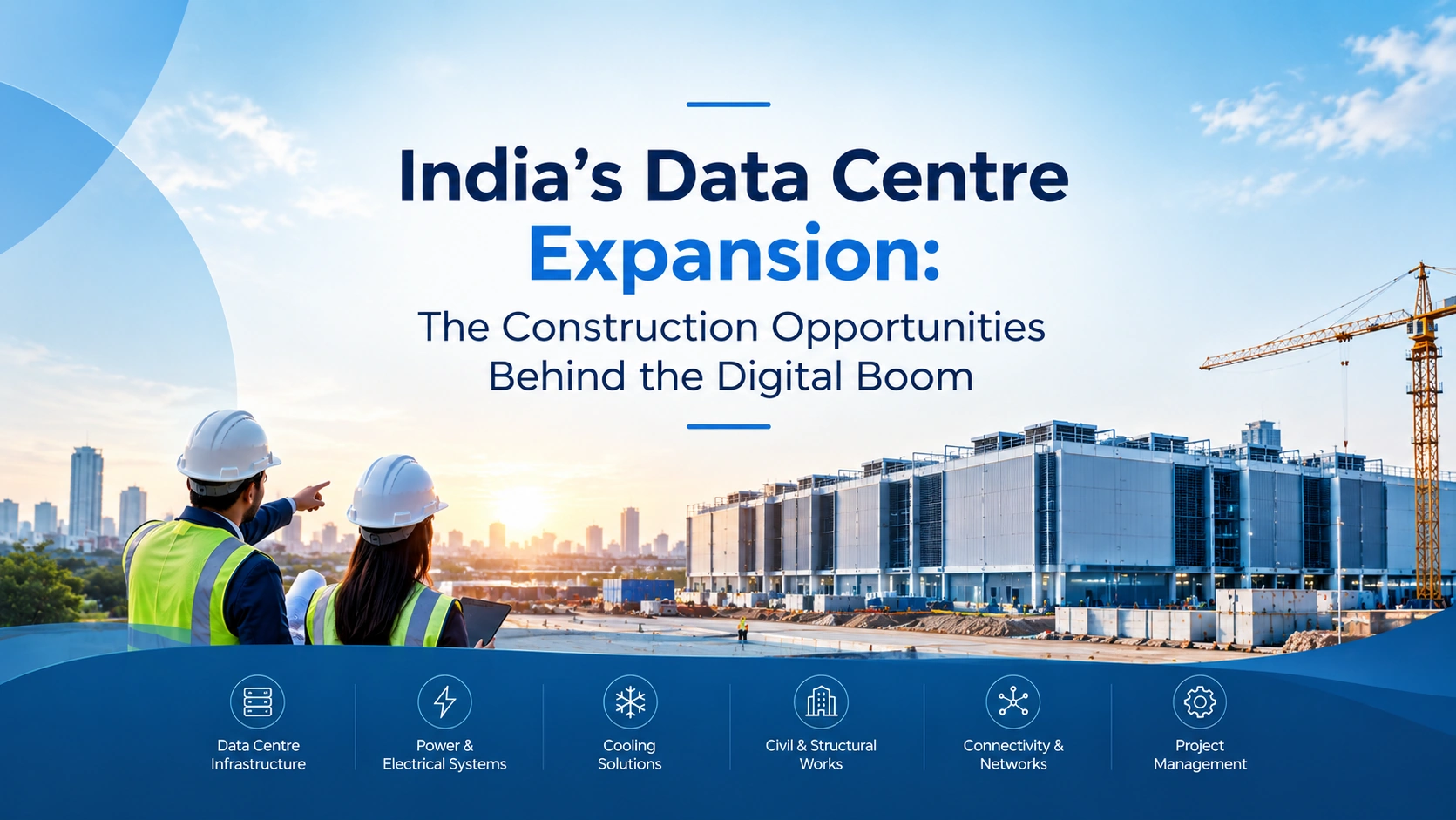
Post 01
India’s Data Centre Expansion: The Construction Opportunities Behind the Digital Boom
17 Sep 2026

Post 02
GCC Construction Pipeline 2026: Where the Next Wave of Projects Is Coming From
16 Sep 2026

Post 03
Tender Management Software for Contractors: How to Stop Losing Bids to Bad Tracking
07 Sep 2026