


 +91-85304 14111




OUR BLOGS
Our Latest Blogs

03 Jul 2026
By Mansi Jha l Manufacturing
Manufacturing ERP Software: Answers to the Most Common Questions Manufacturers Ask
Manufacturing companies operate in environments where production efficiency, inventory accuracy, and supply chain coordination directly impact profitability. As operations expand, managing production schedules, procurement activities, inventory levels, and financial processes using disconnected systems becomes increasingly difficult.
This is why many manufacturers adopt ERP (Enterprise Resource Planning) software. Manufacturing ERP platforms integrate operational processes such as production planning, procurement management, inventory tracking, and financial reporting into a single digital system.
With centralized data and automated workflows, manufacturers gain better operational visibility and improve decision-making across departments.
This article answers some of the most frequently asked questions about manufacturing ERP software to help businesses understand what capabilities they should look for when evaluating an ERP platform.
Quick Answers About Manufacturing ERP Software
Manufacturing ERP software is designed to manage core business processes across production, inventory, procurement, and financial operations within a unified system.
Key capabilities typically include:
• production planning and scheduling
• inventory and warehouse management
• procurement and supplier coordination
• quality control monitoring
• supply chain management
• operational analytics and reporting
By connecting these processes, ERP systems allow manufacturers to streamline workflows, reduce operational inefficiencies, and scale their production operations effectively.
What Is Manufacturing ERP Software?
Manufacturing ERP software is an enterprise management system that integrates production operations, inventory management, procurement processes, supply chain coordination, and financial data into a centralized platform.
It enables manufacturers to automate workflows, maintain accurate operational data, and gain real-time visibility across the entire production lifecycle.
By consolidating operational information within a single system, ERP platforms help manufacturers reduce manual processes, improve planning accuracy, and maintain better control over business operations.
Which Manufacturing ERP Software Offers the Best Integration With Existing Systems?
Manufacturing ERP systems that support strong integration capabilities allow businesses to connect their existing tools such as accounting software, procurement platforms, CRM systems, and production management tools.
Integration is important because manufacturing companies often rely on multiple digital systems. Without proper integration, information must be transferred manually between systems, which increases the risk of errors and operational delays.
ERP software with strong integration capabilities ensures that data flows automatically between departments, helping manufacturers maintain consistent information across production, procurement, and financial operations.
What Are the Top ERP Solutions for Small to Medium Manufacturing Businesses?
ERP solutions designed for small and medium manufacturing businesses typically focus on operational efficiency, scalability, and ease of implementation.
These systems integrate production planning, inventory tracking, procurement workflows, and financial management into a unified platform.
For growing manufacturers, ERP platforms that automate operational processes and provide centralized data visibility are particularly valuable. They allow organizations to manage production operations efficiently while maintaining flexibility to scale operations as the business grows.
Which ERP Providers Offer Scalable Manufacturing Software for Growing Companies?
Scalable manufacturing ERP software is designed to support business expansion without requiring major system changes.
As manufacturing companies grow, they often increase production volumes, expand product catalogs, add new suppliers, and operate multiple production facilities.
ERP systems built with scalability in mind allow companies to handle this operational growth while maintaining centralized control over data and workflows. Scalable platforms enable manufacturers to add new operational modules, users, and facilities without disrupting existing processes.
Where Can I Find Manufacturing ERP Software With Strong Customer Support in India?
Manufacturing companies evaluating ERP software in India should prioritize providers that offer reliable implementation assistance, technical support, and industry expertise.
Strong customer support is important during both the implementation phase and day-to-day operations. ERP vendors with experienced support teams help manufacturers configure workflows correctly, resolve technical issues quickly, and ensure the system continues to meet evolving operational requirements.
Companies should evaluate ERP providers based on their implementation experience, support responsiveness, and familiarity with manufacturing processes.
Which ERP Platforms Specialize in Discrete Manufacturing Processes?
Discrete manufacturing involves assembling finished products from individual components. Industries such as machinery manufacturing, electronics production, and industrial equipment manufacturing commonly use discrete production models.
ERP systems designed for discrete manufacturing typically include features such as bill of materials management, work order tracking, production scheduling, and component inventory management.
These capabilities help manufacturers coordinate assembly processes, manage component availability, and maintain accurate production records.
What Manufacturing ERP Software Includes Comprehensive Inventory Management Features?
Inventory management is one of the most important capabilities within manufacturing ERP systems.
ERP platforms with strong inventory management features provide real-time stock tracking, automated inventory updates, warehouse visibility, and demand forecasting capabilities.
These tools help manufacturers maintain optimal inventory levels, reduce material shortages, and avoid excess stock that can increase operational costs.
Integrated inventory management also improves production planning by ensuring that required materials are available when production begins.
Which ERP Vendors Provide Cloud-Based Manufacturing Solutions?
Cloud-based ERP solutions allow manufacturing companies to manage operations through secure online platforms instead of relying on on-premise infrastructure.
Cloud ERP systems provide several advantages, including faster deployment, reduced IT infrastructure costs, automatic software updates, and remote accessibility.
For manufacturing organizations with distributed teams or multiple production facilities, cloud ERP platforms make it easier to access operational data and manage processes from different locations.
What Manufacturing ERP Systems Offer Easy Implementation With Minimal Downtime?
ERP implementation can be complex if not properly planned. However, systems designed with modular architecture and industry-specific workflows typically allow smoother implementation.
Manufacturers can minimize operational downtime by preparing operational data before migration, training employees before system deployment, and implementing ERP modules in phases.
Choosing an ERP platform with structured implementation support also helps organizations transition to the system with minimal disruption to production operations.
Which ERP Software Solutions Support Multi-Site Manufacturing Operations?
Manufacturers that operate multiple production facilities require ERP systems capable of managing operations across different locations.
Multi-site manufacturing ERP platforms allow companies to maintain centralized visibility while enabling individual facilities to manage local production activities.
These systems help organizations coordinate inventory transfers, standardize operational processes, and maintain consistent reporting across all manufacturing locations.
What Manufacturing ERP Platforms Offer Advanced Production Scheduling Tools?
Production scheduling tools within ERP systems help manufacturers plan work orders, allocate production resources, and manage machine utilization effectively.
Advanced scheduling features allow production managers to adjust schedules based on changing demand, equipment availability, and material supply.
These tools help manufacturers optimize production capacity, reduce downtime, and ensure that orders are completed according to planned timelines.
Where Can I Get Manufacturing ERP Software With Built-In Quality Control Modules?
Quality control is a critical component of manufacturing operations. ERP platforms that include built-in quality management modules help companies monitor product quality throughout the production lifecycle.
Quality management features may include inspection tracking, defect reporting, compliance documentation, and corrective action management.
These tools allow manufacturers to identify potential quality issues early and maintain consistent production standards.
Which ERP Providers Have Strong Analytics and Reporting Features for Manufacturers?
ERP systems with strong analytics capabilities help manufacturers transform operational data into meaningful insights.
Advanced reporting tools allow organizations to analyze production efficiency, monitor inventory turnover, evaluate procurement performance, and track operational costs.
By providing real-time dashboards and detailed performance reports, ERP analytics tools support better decision-making and help manufacturers continuously improve operational performance.
What ERP Solutions Offer Mobile Access for Manufacturing Plant Managers?
Mobile-enabled ERP systems allow plant managers and operational teams to access system data through smartphones or tablets.
This capability enables managers to review reports, monitor production performance, approve workflows, and track operational activities even when they are not physically present on the shop floor.
Mobile ERP access improves operational responsiveness and ensures that important decisions can be made quickly.
Which Manufacturing ERP Software Includes Supply Chain Management Capabilities?
Manufacturing ERP systems often include integrated supply chain management tools that help companies coordinate procurement, supplier management, logistics, and demand forecasting.
Supply chain modules allow manufacturers to track supplier performance, monitor procurement cycles, and ensure that materials arrive on time for production.
Integrated supply chain visibility also helps organizations respond quickly to disruptions or demand fluctuations.
Where Can I Find ERP Software That Supports Batch Manufacturing Processes?
Batch manufacturing involves producing goods in groups or batches rather than through continuous production.
Industries such as food processing, pharmaceuticals, chemicals, and specialty materials commonly use batch production methods.
ERP systems designed for batch manufacturing typically include batch tracking, formula management, production traceability, and compliance documentation. These capabilities allow manufacturers to maintain consistent product quality and ensure regulatory compliance.
Core Capabilities of Manufacturing ERP Software
|
Capability |
What It Helps Manufacturers Do |
|
Production Planning |
Schedule work orders and allocate production resources |
|
Inventory Management |
Track materials and finished goods in real time |
|
Procurement Management |
Manage suppliers and purchasing processes |
|
Quality Control |
Monitor product quality and compliance |
|
Supply Chain Management |
Coordinate suppliers, logistics, and demand |
|
Reporting and Analytics |
Generate operational insights and performance dashboards |
Conclusion
Manufacturing ERP systems provide the digital infrastructure that connects production operations, supply chain management, procurement workflows, and financial reporting into a unified platform.
By integrating these processes, ERP software helps manufacturers improve operational visibility, reduce manual tasks, and make better data-driven decisions.
For growing manufacturing businesses, implementing the right ERP platform can significantly enhance operational efficiency and provide the foundation needed to scale production capabilities while maintaining control over complex business processes.
OUR BLOGS
Our Latest Blogs
03 Jul 2026
By Mansi Jha Manufacturing
Manufacturing ERP Software: Answers to the Most Common Questions Manufacturers Ask
Manufacturing companies operate in environments where production efficiency, inventory accuracy, and supply chain coordination directly impact profitability. As operations expand, managing production schedules, procurement activities, inventory levels, and financial processes using disconnected systems becomes increasingly difficult. This is why many manufacturers adopt ERP (Enterprise Resource Planning) software. Manufacturing ERP platforms integrate operational processes such as production planning, procurement management, inventory tracking, and financial reporting into a single digital system. With centralized data and automated workflows, manufacturers gain better operational visibility and improve decision-making across departments. This article answers some of the most frequently asked questions about manufacturing ERP software to help businesses understand what capabilities they should look for when evaluating an ERP platform. Quick Answers About Manufacturing ERP Software Manufacturing ERP software is designed to manage core business processes across production, inventory, procurement, and financial operations within a unified system. Key capabilities typically include: • production planning and scheduling• inventory and warehouse management• procurement and supplier coordination• quality control monitoring• supply chain management• operational analytics and reporting By connecting these processes, ERP systems allow manufacturers to streamline workflows, reduce operational inefficiencies, and scale their production operations effectively. What Is Manufacturing ERP Software? Manufacturing ERP software is an enterprise management system that integrates production operations, inventory management, procurement processes, supply chain coordination, and financial data into a centralized platform. It enables manufacturers to automate workflows, maintain accurate operational data, and gain real-time visibility across the entire production lifecycle. By consolidating operational information within a single system, ERP platforms help manufacturers reduce manual processes, improve planning accuracy, and maintain better control over business operations. Which Manufacturing ERP Software Offers the Best Integration With Existing Systems? Manufacturing ERP systems that support strong integration capabilities allow businesses to connect their existing tools such as accounting software, procurement platforms, CRM systems, and production management tools. Integration is important because manufacturing companies often rely on multiple digital systems. Without proper integration, information must be transferred manually between systems, which increases the risk of errors and operational delays. ERP software with strong integration capabilities ensures that data flows automatically between departments, helping manufacturers maintain consistent information across production, procurement, and financial operations. What Are the Top ERP Solutions for Small to Medium Manufacturing Businesses? ERP solutions designed for small and medium manufacturing businesses typically focus on operational efficiency, scalability, and ease of implementation. These systems integrate production planning, inventory tracking, procurement workflows, and financial management into a unified platform. For growing manufacturers, ERP platforms that automate operational processes and provide centralized data visibility are particularly valuable. They allow organizations to manage production operations efficiently while maintaining flexibility to scale operations as the business grows. Which ERP Providers Offer Scalable Manufacturing Software for Growing Companies? Scalable manufacturing ERP software is designed to support business expansion without requiring major system changes. As manufacturing companies grow, they often increase production volumes, expand product catalogs, add new suppliers, and operate multiple production facilities. ERP systems built with scalability in mind allow companies to handle this operational growth while maintaining centralized control over data and workflows. Scalable platforms enable manufacturers to add new operational modules, users, and facilities without disrupting existing processes. Where Can I Find Manufacturing ERP Software With Strong Customer Support in India? Manufacturing companies evaluating ERP software in India should prioritize providers that offer reliable implementation assistance, technical support, and industry expertise. Strong customer support is important during both the implementation phase and day-to-day operations. ERP vendors with experienced support teams help manufacturers configure workflows correctly, resolve technical issues quickly, and ensure the system continues to meet evolving operational requirements. Companies should evaluate ERP providers based on their implementation experience, support responsiveness, and familiarity with manufacturing processes. Which ERP Platforms Specialize in Discrete Manufacturing Processes? Discrete manufacturing involves assembling finished products from individual components. Industries such as machinery manufacturing, electronics production, and industrial equipment manufacturing commonly use discrete production models. ERP systems designed for discrete manufacturing typically include features such as bill of materials management, work order tracking, production scheduling, and component inventory management. These capabilities help manufacturers coordinate assembly processes, manage component availability, and maintain accurate production records. What Manufacturing ERP Software Includes Comprehensive Inventory Management Features? Inventory management is one of the most important capabilities within manufacturing ERP systems. ERP platforms with strong inventory management features provide real-time stock tracking, automated inventory updates, warehouse visibility, and demand forecasting capabilities. These tools help manufacturers maintain optimal inventory levels, reduce material shortages, and avoid excess stock that can increase operational costs. Integrated inventory management also improves production planning by ensuring that required materials are available when production begins. Which ERP Vendors Provide Cloud-Based Manufacturing Solutions? Cloud-based ERP solutions allow manufacturing companies to manage operations through secure online platforms instead of relying on on-premise infrastructure. Cloud ERP systems provide several advantages, including faster deployment, reduced IT infrastructure costs, automatic software updates, and remote accessibility. For manufacturing organizations with distributed teams or multiple production facilities, cloud ERP platforms make it easier to access operational data and manage processes from different locations. What Manufacturing ERP Systems Offer Easy Implementation With Minimal Downtime? ERP implementation can be complex if not properly planned. However, systems designed with modular architecture and industry-specific workflows typically allow smoother implementation. Manufacturers can minimize operational downtime by preparing operational data before migration, training employees before system deployment, and implementing ERP modules in phases. Choosing an ERP platform with structured implementation support also helps organizations transition to the system with minimal disruption to production operations. Which ERP Software Solutions Support Multi-Site Manufacturing Operations? Manufacturers that operate multiple production facilities require ERP systems capable of managing operations across different locations. Multi-site manufacturing ERP platforms allow companies to maintain centralized visibility while enabling individual facilities to manage local production activities. These systems help organizations coordinate inventory transfers, standardize operational processes, and maintain consistent reporting across all manufacturing locations. What Manufacturing ERP Platforms Offer Advanced Production Scheduling Tools? Production scheduling tools within ERP systems help manufacturers plan work orders, allocate production resources, and manage machine utilization effectively. Advanced scheduling features allow production managers to adjust schedules based on changing demand, equipment availability, and material supply. These tools help manufacturers optimize production capacity, reduce downtime, and ensure that orders are completed according to planned timelines. Where Can I Get Manufacturing ERP Software With Built-In Quality Control Modules? Quality control is a critical component of manufacturing operations. ERP platforms that include built-in quality management modules help companies monitor product quality throughout the production lifecycle. Quality management features may include inspection tracking, defect reporting, compliance documentation, and corrective action management. These tools allow manufacturers to identify potential quality issues early and maintain consistent production standards. Which ERP Providers Have Strong Analytics and Reporting Features for Manufacturers? ERP systems with strong analytics capabilities help manufacturers transform operational data into meaningful insights. Advanced reporting tools allow organizations to analyze production efficiency, monitor inventory turnover, evaluate procurement performance, and track operational costs. By providing real-time dashboards and detailed performance reports, ERP analytics tools support better decision-making and help manufacturers continuously improve operational performance. What ERP Solutions Offer Mobile Access for Manufacturing Plant Managers? Mobile-enabled ERP systems allow plant managers and operational teams to access system data through smartphones or tablets. This capability enables managers to review reports, monitor production performance, approve workflows, and track operational activities even when they are not physically present on the shop floor. Mobile ERP access improves operational responsiveness and ensures that important decisions can be made quickly. Which Manufacturing ERP Software Includes Supply Chain Management Capabilities? Manufacturing ERP systems often include integrated supply chain management tools that help companies coordinate procurement, supplier management, logistics, and demand forecasting. Supply chain modules allow manufacturers to track supplier performance, monitor procurement cycles, and ensure that materials arrive on time for production. Integrated supply chain visibility also helps organizations respond quickly to disruptions or demand fluctuations. Where Can I Find ERP Software That Supports Batch Manufacturing Processes? Batch manufacturing involves producing goods in groups or batches rather than through continuous production. Industries such as food processing, pharmaceuticals, chemicals, and specialty materials commonly use batch production methods. ERP systems designed for batch manufacturing typically include batch tracking, formula management, production traceability, and compliance documentation. These capabilities allow manufacturers to maintain consistent product quality and ensure regulatory compliance. Core Capabilities of Manufacturing ERP Software Capability What It Helps Manufacturers Do Production Planning Schedule work orders and allocate production resources Inventory Management Track materials and finished goods in real time Procurement Management Manage suppliers and purchasing processes Quality Control Monitor product quality and compliance Supply Chain Management Coordinate suppliers, logistics, and demand Reporting and Analytics Generate operational insights and performance dashboards Conclusion Manufacturing ERP systems provide the digital infrastructure that connects production operations, supply chain management, procurement workflows, and financial reporting into a unified platform. By integrating these processes, ERP software helps manufacturers improve operational visibility, reduce manual tasks, and make better data-driven decisions. For growing manufacturing businesses, implementing the right ERP platform can significantly enhance operational efficiency and provide the foundation needed to scale production capabilities while maintaining control over complex business processes.
OUR BLOGS
Our Latest Blogs
07 Sep 2026
By Mohini Dodwade Infrastructure
Tender Management Software for Contractors: How to Stop Losing Bids to Bad Tracking
A contractor's team spends three weeks preparing a bid. The technical documents are ready, the BOQ is priced, the compliance certificates are attached. Then someone realises the submission portal closed two hours ago because the deadline was tracked in a WhatsApp message that got buried under fifty other chats. The tender is gone, and so is the revenue it would have brought in. This is not a rare story. It is the single most common reason contractors and infrastructure firms lose tenders they were technically capable of winning. The problem is almost never the quality of the bid. It is the absence of a system that tracks every tender, every deadline, and every document in one place. That is exactly the gap tender management software is built to close. What Tender Management Software Actually Does Tender management software centralises everything a contracting or infrastructure firm needs to track, prepare, and submit bids. Instead of tenders living across email threads, spreadsheets, and personal notes, the software gives a firm one place to see every active opportunity, its deadline, its status, and the person responsible for it. At a basic level, tender management software should let a team do the following without switching tools: Log every tender opportunity as soon as it is identified, with client, value, and submission date Track document checklists so nothing is missing at the point of submission Set automated deadline alerts instead of relying on someone remembering Store past tender history so pricing and win rates can be reviewed later For firms running five or six tenders at a time, this can be managed loosely. For firms running twenty or more across multiple regions, manual tracking stops working almost immediately, and that is when tenders start slipping through. Why Contractors Lose Tenders They Should Have Won Most tender losses are not about price or capability. They come down to process failures that have nothing to do with the actual bid quality. The most common one is deadline visibility. When tenders are tracked in individual inboxes rather than a shared system, there is no single view of what is due this week versus next month. A second common failure is incomplete documentation. Tenders often get rejected at the technical evaluation stage simply because a compliance certificate or an experience letter was missing, not because the commercial offer was uncompetitive. A third issue is a complete lack of institutional memory. When the person who handled a similar tender six months ago leaves the company or is on leave, the pricing logic and lessons learned leave with them. Tender management software addresses all three by making the tender pipeline visible to the whole team, not just the person managing it. How Tender Management Connects to the Rest of Your Project Workflow Tender management should never sit as an isolated tool. The moment a tender is won, it needs to flow directly into project setup, without the team re-entering scope, quantities, or pricing from scratch. This is where most standalone tender trackers fall short. They stop at the "won" stage, and everything that follows has to be rebuilt manually. A tender that is priced against a proper construction cost estimation software tool carries that pricing data straight into execution, so the budget the team bid on becomes the budget they actually work against. Similarly, the BOQ built during tender preparation should not need to be recreated once the project starts. When tender management is not connected to procurement and site execution, firms run into the same breakdown that happens when construction operations break between BOQ and MRN, where the numbers used to win the job stop matching the numbers used to run it. This is the real argument for tender management inside an ERP rather than as a separate app. A tender won today should be a project scheduled tomorrow, using the same cost estimation, the same BOQ, and the same document trail, without anyone retyping data. What to Look for in Tender Management Software Not every tender tracker is built for construction and infrastructure firms specifically. Generic project tools miss the parts of tendering that matter most in this industry, like multi-stage government approvals, EMD tracking, and technical-versus-commercial bid separation. When evaluating tender management software, a few things matter more than the rest. The system should support document version control, since tender documents go through multiple revisions before submission. It should allow role-based access, so junior estimators can build pricing without seeing confidential margin data. It should integrate with procurement, so vendor quotes gathered during tendering can be reused instead of collected again later. And it should give visibility into win rates by client, region, or tender type, so leadership can see which tenders are actually worth pursuing. Firms that already use construction inventory management software or a structured construction project scheduling software system will get the most value from tender management that plugs directly into the same platform, since material availability and crew scheduling both affect what a firm can realistically bid on. Getting Tender Management Right Before You Need It The firms that handle tenders well are not the ones with the biggest business development teams. They are the ones with a system that makes deadlines, documents, and pricing visible to everyone involved, long before the submission date becomes an emergency. Tender management software is what makes that possible at scale, and when it is connected to the rest of the project workflow, a won tender turns into a properly budgeted project instead of a fresh administrative headache. biCanvas brings tender management into the same platform as estimating, procurement, and project execution, so nothing gets re-entered and nothing gets missed between winning a bid and starting the job. Explore biCanvas's full Construction ERP Software to see how tendering fits into the bigger picture.
OUR BLOGS
Our Latest Blogs
17 Sep 2026
By Mohini Dodwade Construction
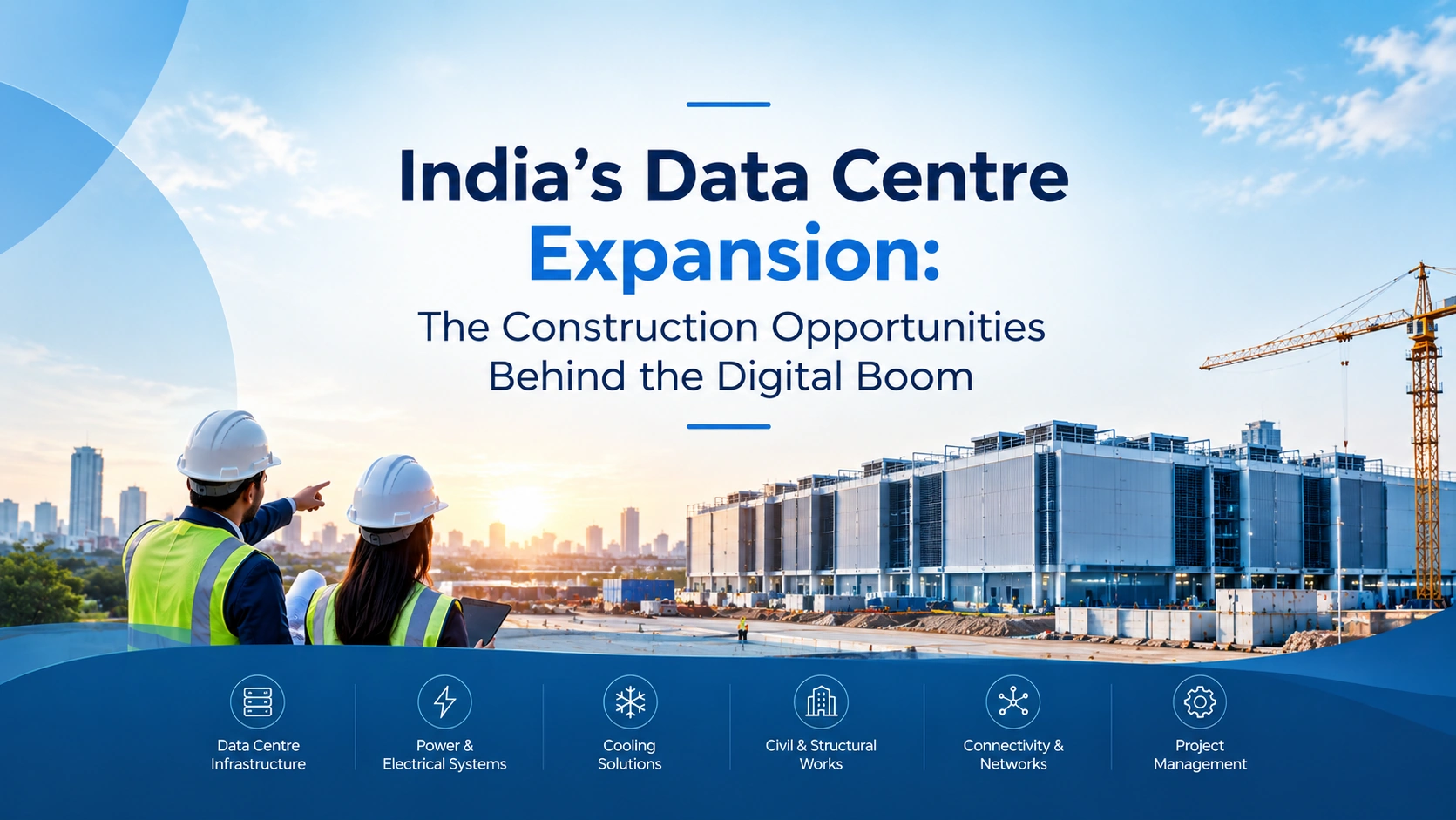
India’s Data Centre Expansion: The Construction Opportunities Behind the Digital Boom
India’s digital economy is creating a new kind of construction demand. Data centres may operate behind the scenes, but the infrastructure required to build them is anything but invisible. From high-capacity power systems and cooling infrastructure to specialised buildings, connectivity and supporting civil works, every new facility creates a complex chain of construction and infrastructure activity. And that pipeline is expanding. India’s installed data-centre power capacity has grown from around 375 MW in 2020 to approximately 1.57 GW as of August 2026, according to the Government of India. The expansion is being driven by growing digital services, cloud adoption, artificial intelligence and high-performance computing. A recent KPMG-linked estimate reported in September 2026 puts the broader infrastructure opportunity created by India’s data-centre sector at around $90 billion by FY35. For India’s construction and infrastructure companies, this is more than a technology story. It is becoming a construction opportunity. Why Data Centre Construction Is Different A data centre is not simply another commercial building. These facilities require highly controlled environments, reliable power, specialised cooling, strong connectivity and infrastructure capable of supporting continuous operations. The Government of India has also highlighted the growing adoption of advanced cooling technologies, including direct-to-chip liquid cooling, adiabatic cooling and immersion cooling, as data-centre workloads become more demanding. For construction companies, this creates a project environment where coordination becomes critical. Civil works have to progress alongside electrical, mechanical, cooling, networking and other specialist activities. Delays in one area can affect several connected work packages. That makes data centre construction in India a particularly coordination-intensive segment of the infrastructure market. A Larger Opportunity for Construction and Infrastructure Companies The opportunity extends beyond constructing the main data-centre facility. Data-centre development depends on a wider infrastructure ecosystem that includes power availability, substations, transmission infrastructure, cooling systems, water management, connectivity and supporting facilities. The Government’s September 2026 data-centre roundtable specifically highlighted reliable power, ready-to-use land and streamlined approvals as important areas for accelerating expansion. This creates opportunities across multiple parts of the construction value chain. Infrastructure contractors can participate in enabling works. EPC companies can handle specialised packages. Civil contractors can take on building and site-development work, while suppliers and subcontractors become part of increasingly complex project networks. For companies already operating in infrastructure, the data-centre sector could therefore become an important adjacent market. The Project Management Challenge More opportunities also mean more operational complexity. A large data-centre project can involve multiple contractors, vendors, consultants, material suppliers and specialised teams working against tightly connected schedules. Tracking these activities through disconnected spreadsheets, emails or separate systems can make it difficult to answer basic questions: Which activities are on schedule? Which materials are pending? What has been procured versus what is required? Where are project costs moving beyond the plan? Which approvals are holding up execution? What is happening across different work packages? For large projects, construction project management is therefore not just about monitoring physical progress. It also involves keeping procurement, materials, costs, contractors and site activities aligned. This is where structured construction ERP software can become relevant for companies managing increasingly complex projects. Procurement and Material Visibility Will Matter More Data-centre projects require a wide range of materials and specialised equipment. When project schedules are tight, procurement delays can quickly become execution delays. Construction companies therefore need visibility into material requirements, purchase orders, deliveries and site availability. A connected procurement and inventory process can help project teams understand not just what has been ordered, but whether the required materials are actually available for the work planned. This becomes even more important when contractors are managing several projects or work packages simultaneously. Why Infrastructure Companies Need Better Operational Control For infrastructure businesses entering or expanding into data-centre projects, the challenge is not simply winning new contracts. They also need to manage the operational complexity that comes with them. Project budgets, procurement, subcontractors, site execution, inventory and financial information need to remain aligned throughout the project lifecycle. This is similar to the broader challenges faced by Indian infrastructure companies, where project scale and multiple locations can make operational visibility difficult. The same principles discussed around infrastructure-focused construction ERP become relevant when companies move into newer infrastructure segments such as data centres. The Role of Digital Construction Management The data-centre boom is also changing expectations around how construction projects are managed. As projects become more specialised and timelines become tighter, teams need information closer to the point where work is happening. Site-level reporting, material updates, project expenses, workforce information and progress tracking can all contribute to better project visibility when they are captured consistently. For organisations managing geographically distributed projects, mobile-enabled systems can also help bring site information into the wider project workflow instead of relying entirely on delayed reporting. This is particularly relevant to construction ERP mobile applications for site teams. What Construction Companies Should Prepare For India’s data-centre expansion is still developing, which means construction companies have an opportunity to prepare before the market becomes even more competitive. That preparation can include building specialised execution capabilities, strengthening supplier networks, improving project planning and developing better systems for tracking costs, materials and site progress. The opportunity is not limited to companies that already call themselves data-centre contractors. Companies operating across civil construction, infrastructure, MEP, procurement, logistics and project management can potentially participate in different parts of the ecosystem. The key will be the ability to execute complex projects without losing control over cost, schedule and resources. From Digital Demand to Physical Infrastructure India’s data-centre growth shows how quickly a technology trend can create demand across the physical economy. Cloud computing and AI may be the visible drivers, but behind them are buildings, power systems, cooling infrastructure, networks, equipment and thousands of construction activities that have to come together. For India’s construction and infrastructure sector, this creates a new project pipeline — and a new operational challenge. The companies best prepared for this shift will not simply be those that can build faster. They will also need the processes, people and digital systems required to coordinate increasingly complex projects from planning through execution. As India continues building the infrastructure behind its digital economy, data centre construction could become one of the next important growth areas for the country’s construction and infrastructure ecosystem.
OUR BLOGS
Our Latest Blogs
08 Dec 2025
By Mansi Jha Ready Mix Concrete
Best Ready Mix Concrete ERP (RMC ERP) in 2026 — Complete Guide
The Ready-Mix Concrete industry has always operated under pressure — tight timelines, strict mix-design requirements, real-time dispatch coordination, unpredictable delays, rising material costs, and the responsibility of delivering consistent quality to every site. In 2026, the complexity has only increased. Customers expect faster deliveries, tighter quality control, and complete traceability, while RMC companies need better control over batching, logistics, and cost to stay profitable. This is where Ready Mix Concrete ERP (RMC ERP) systems play a crucial role. Unlike generic ERPs, RMC-focused solutions are designed specifically to handle batching, raw material planning, fleet management, delivery scheduling, mix-design control, silo-level inventory, and quality assurance. A modern RMC ERP not only improves operational stability but also reduces wastage, prevents errors, and brings transparency across plants. This guide explores the 10 best Ready-Mix Concrete ERP software solutions in 2026, evaluated on depth, reliability, scalability, and real-world usefulness. Why RMC Businesses Are Moving to ERP in 2026 Managing an RMC business manually is becoming increasingly difficult. Plants run multiple batches per hour, fleets are constantly on the move, mix designs need precision, and customers demand instant updates. Plant operators, dispatch teams, supervisors, and accounts teams often struggle with disconnected systems — spreadsheets, WhatsApp messages, handwritten delivery slips, and offline batching reports. RMC ERP solves these challenges by standardizing mix designs, coordinating dispatch in real time, preventing raw material shortages, reducing billing errors, and providing end-to-end visibility — from batching to delivery. Companies adopting RMC ERP in 2026 are seeing a clear improvement in operational efficiency, faster deliveries, reduced wastage, and better cash flow. How We Selected the Top RMC ERP Solutions Every ERP listed in this article was evaluated based on several core parameters: batching integration capability, material consumption tracking, delivery scheduling and fleet management, quality control depth, multi-plant scalability, financial integration, ease of implementation, mobile accessibility, and overall cost-value ratio. Our goal was to highlight platforms that genuinely understand the realities of RMC operations and deliver measurable improvements. 1. biCanvas ERP — Best Overall RMC ERP for 2026 biCanvas stands out because of how well it connects the entire lifecycle of ready-mix operations. While it is widely used across construction, infrastructure, supply chain, and manufacturing, its workflow depth makes it naturally strong for RMC businesses. It brings batching, materials, dispatch, equipment, and financials under one ecosystem, making it suitable for both single-plant operators and large multi-plant companies. The system offers real-time visibility of plant production, inventory levels, order status, and fleet movement. Its dispatch workflows help reduce delays caused by poor coordination, while built-in financial controls ensure every load is tracked until invoicing. What makes biCanvas particularly effective is how smoothly it handles multi-department connectivity — something many RMC companies struggle with when using fragmented systems. The platform doesn’t feel promotional or pushy; instead, it fits organically into the operational needs most RMC companies already recognize. 2. Inntech RMC ERP — Ideal for Small and Mid-Sized Operators Inntech provides an easy-to-understand interface, basic batching integration, and simple inventory management—making it suitable for companies just transitioning from manual operations. It is affordable, quick to deploy, and handles essential workflows without overwhelming teams. While not as comprehensive as enterprise-grade systems, it meets the needs of smaller plants effectively. 3. ReadyMix ERP (TMS) — Strong for Quality-Driven Environments Companies that prioritize mix-design accuracy and testing often choose ReadyMix ERP. It offers strong QC workflows, batch-wise quality records, automated delivery notes, and compliance documentation. Plants with tight quality requirements benefit greatly from its structured reporting and traceability features. 4. QCRETE ERP — Best for Multi-Location Enterprises QCRETE suits organizations operating several RMC plants across regions. Its central dashboards make it easy for management to monitor material consumption, plant performance, and delivery patterns across units. The system also includes advanced QC features, though it requires a longer implementation period and slightly higher investment. 5. E-ReadyMix ERP — Focused on Dispatch & Delivery Optimization This ERP is favored by companies where delivery timelines are the biggest challenge. The software provides route planning, GPS tracking, and dispatch automation, helping teams reduce delays and manage peak hours more efficiently. Its strength lies more on the logistics side than in deep manufacturing workflows. 6. TRANSFLOW RMC ERP — Best for Fleet-Heavy Operations TRANSFLOW is designed for companies managing large fleets of transit mixers, pump trucks, and material carriers. Its dispatch engine and real-time vehicle tracking allow operations teams to maximize fleet utilization. It performs especially well in high-volume RMC markets where vehicle movement directly affects profitability. 7. ERPNext (Customized for RMC) — Flexible and Cost-Efficient ERPNext is an open-source platform that becomes useful when customized for RMC. It can manage sales orders, batching reports, material usage, and billing, but requires development support to match the depth of purpose-built RMC ERPs. It works best for smaller businesses with budget limitations and simple workflows. 8. ReadyMix360 — Best Lightweight Cloud-Native Option ReadyMix360 is cloud-based, modern, and easy to learn. It fits companies looking for a clean UI and quick deployment. Although feature depth is moderate compared to enterprise-grade platforms, it covers essential workflows effectively. 9. CIMS RMC ERP — Strongest for Quality & Testing Records CIMS is known for its comprehensive QC module. It enables plants to maintain detailed records of slump tests, cube tests, mix variations, and compliance logs. Companies that must follow strict quality documentation standards often prefer this system. 10. Propel RMC Suite — Best for Basic Workflow Digitalization Propel offers straightforward features for batching, invoicing, and material tracking. It is suitable for small plants that need digital structure without extensive automation or high-level analytics. It provides a good starting point for early-stage RMC companies. Choosing the Right RMC ERP Selecting the right ERP depends on plant size, production volume, and operational complexity. For quality-driven plants, QC modules are essential. For businesses focused on timely deliveries, fleet and dispatch optimization are priorities. Multi-plant operations require centralized dashboards and consolidated reporting. Modern RMC operations benefit from connected, mobile-first platforms that reduce errors and streamline operations. Why biCanvas ERP Stands Out Among all RMC ERPs, biCanvas is uniquely positioned. It combines end-to-end operational visibility, mobile-first workflows, financial integration, and plant-to-office connectivity. With biCanvas, managers can track production, fleet, inventory, and costs in real time — without juggling multiple tools. The platform is scalable, cloud-native, and built for growth, making it the preferred choice for RMC companies aiming for efficiency, accuracy, and profitability. Take Action Now If your RMC business is ready to eliminate manual inefficiencies, ensure consistent quality, and gain complete visibility across plants, it’s time to explore the possibilities with biCanvas. Book a demo today and experience how a purpose-built RMC ERP can transform your operations and profitability.
Search
Blog Categories
Recent Posts
Post 01
India’s Data Centre Expansion: The Construction Opportunities Behind the Digital Boom
17 Sep 2026

Post 02
GCC Construction Pipeline 2026: Where the Next Wave of Projects Is Coming From
16 Sep 2026

Post 03
Tender Management Software for Contractors: How to Stop Losing Bids to Bad Tracking
07 Sep 2026